
How to Hire Developers in Latin America Without Payroll Risk
Hiring in Latin America can be a competitive advantage, but only if the hiring and payment setup is structurally compliant.
Payroll risk usually does not come from a single mistake. It accumulates when teams move fast with informal contracting, inconsistent payment workflows, or documentation that does not match how the relationship actually operates day to day.
For many teams expanding into LATAM, the goal is a cost-effective process that still holds up under scrutiny.
Rise is built exactly for that, as a global payroll, onboarding, and compliance platform that lets companies pay contractors and full-time employees worldwide in local currencies, stablecoins (USDC/USDT), or other crypto.
Key Takeaways
Payroll risk is primarily driven by misclassification, tax/documentation gaps, weak contracting, and inconsistent payment operations.
A repeatable workflow is the safest approach: model selection → compliant agreement → identity + tax onboarding → controlled payouts → ongoing audit.
Contractor onboarding should be self-service to reduce data-handling risk and maintain clean audit trails.
Worker choice matters: Rise lets global workers choose whether to withdraw in fiat, stablecoins, crypto, or a mix; employers fund payroll, but workers control withdrawal currency.
If a role is long-term and managed like a full-time position, an employment approach (such as EOR) typically reduces structural risk compared to forcing a contractor setup.
What “Payroll Risk” Means In Latin America Hiring
When companies say payroll risk, they are usually referring to exposure created by one or more of the following:
Misclassification risk: the worker is treated like an employee while contracted as an independent contractor.
Compliance and documentation gaps: missing or inconsistent agreements, incomplete identity verification, or incomplete tax documentation.
Tax handling and payment auditability: payments that lack invoice structure, approval trails, or clear funding sources.
IP and confidentiality risk: unclear ownership of work product and insufficient confidentiality/security obligations.
Operational security risk: weak access controls, weak offboarding practices, or poor separation of duties in payment approvals.
The objective is not to avoid hiring complexity. The objective is to build a standardized process where the engagement model and documentation match reality, and where payments are made through an auditable workflow.
Choose The Right Employment Model Before You Hire Developers in Latin America
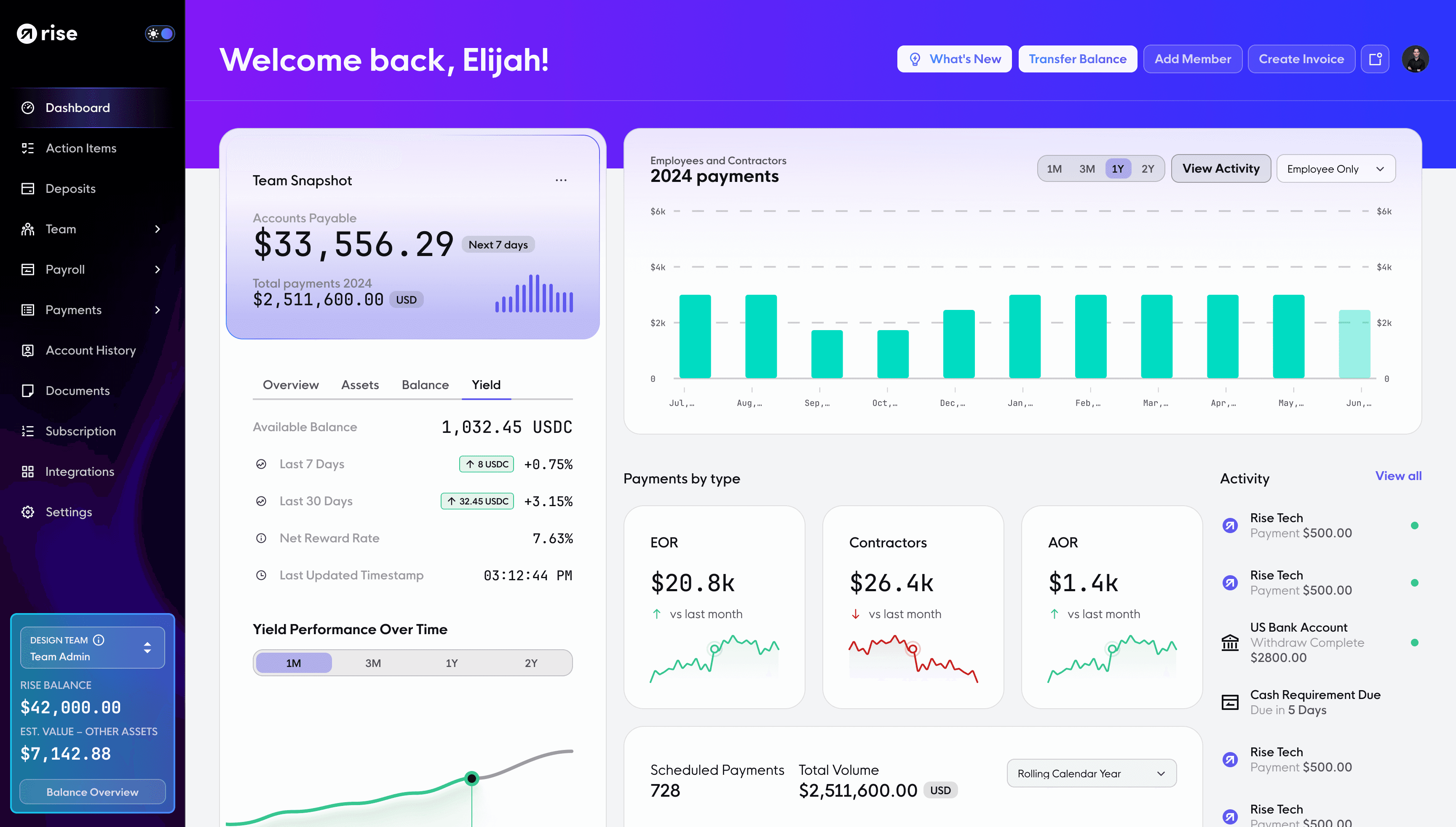
Payroll risk typically begins with choosing a model that does not match how the role will actually operate.
The safest hiring process starts with a clear selection among contractor, AOR, or EOR, particularly when the work is delivered through distributed services and remote collaboration.
Contractor Model (Fast, Flexible, But Requires Tight Controls)
Contractor hiring is commonly used for project-based work, fixed-scope builds, or specialized contributions. The risk is not the model itself; the risk is running contractor relationships like full-time employment without the right structure.
For companies requiring ongoing development capacity, partnering with a nearshore software company provides access to established teams with proven delivery processes while maintaining cost efficiency and time zone alignment.
Rise’s Global Contractor Payroll enables companies to hire and pay contractors worldwide with:
Contractor self-service onboarding
Compliant agreements generated automatically
KYC/AML and identity verification
Tax forms handled automatically
Invoices and expense management
Payouts in local currency, stablecoins, or crypto
Flexible payment schedules (daily, biweekly, monthly, milestone, hourly, one-off)
Instant mass payouts
Critical rule: Contractors always choose their payout currency themselves during each withdrawal cycle. Employers do not control contractor payout currency.
AOR Model (Designed To Reduce Misclassification Exposure)
If the core concern is misclassification risk for contractors, Rise provides an Agent of Record (AOR) model.
Under AOR:
Rise becomes the legal contracting entity
Rise helps protect companies from misclassification risk when hiring contractors globally
Rise manages agreements, KYC/AML, identity verification, and tax documentation
Rise supports compliance across 190+ contractor markets
AOR is particularly useful when the company wants contractor flexibility but needs a stronger compliance wrapper.
EOR Model (Employment Without Opening A Local Entity)
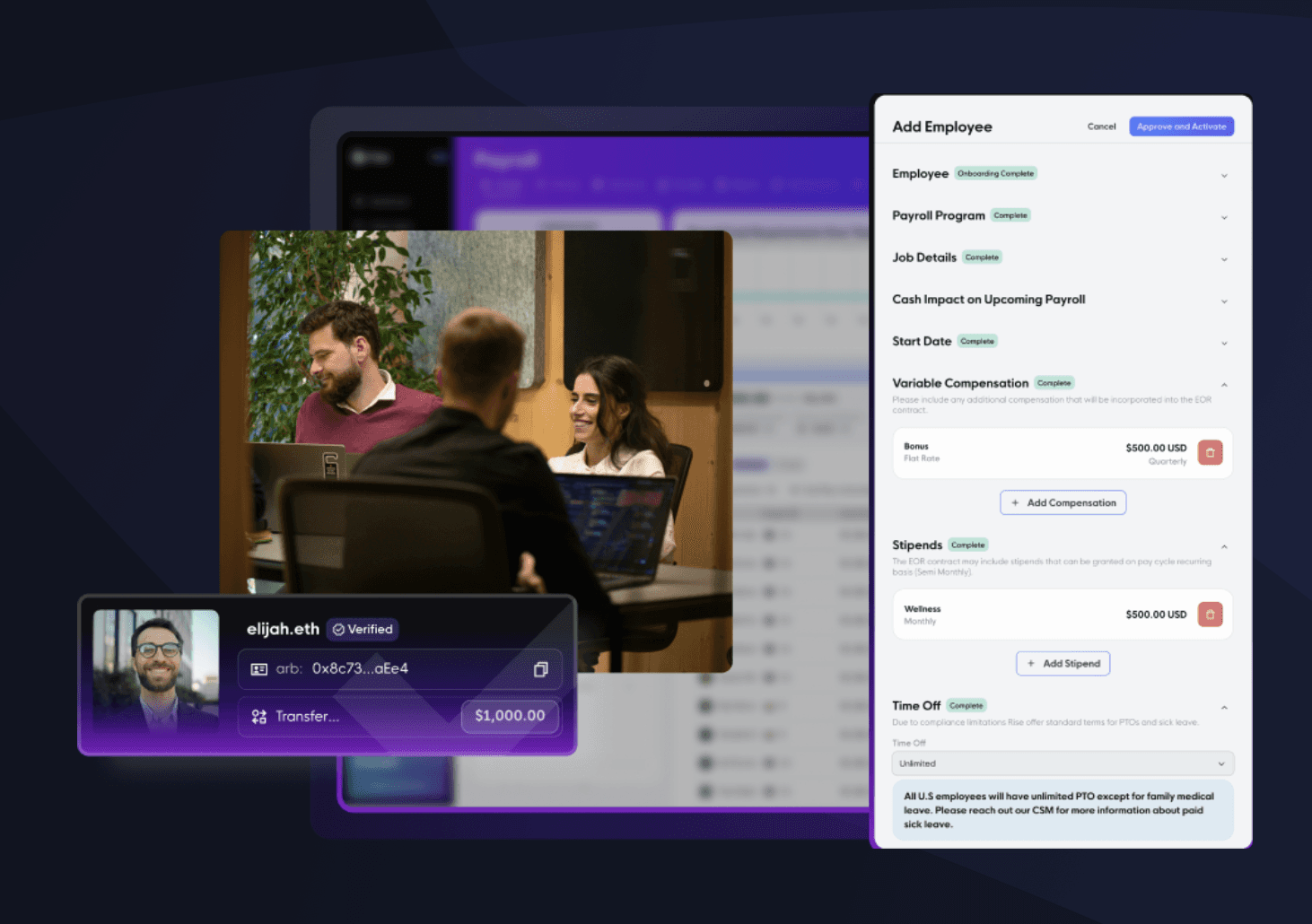
For full-time hires where the company needs an employment relationship without establishing a local entity, Rise provides Employer of Record (EOR):
Rise employs the team on the company’s behalf
Rise handles local labor laws, employer taxes, employee taxes, and compliance
Rise provides compliant employment agreements
Rise delivers local and international benefits
Rise runs payroll entirely and supports hybrid payroll (local currency or crypto)
EOR coverage is dynamic. Rise launches new EOR countries every week and will be live in 60+ EOR markets by end of 2026.
A Practical Decision Framework To Reduce Payroll Risk
Use this decision logic before sending an offer:
Is the role long-term and managed as an ongoing position?If yes, an employment-aligned model such as EOR generally reduces structural risk compared to forcing a contractor arrangement.
Will the contributor work under close day-to-day direction and fixed operating rhythms?If yes, misclassification risk increases under contractor setups; stronger controls or a different model is often appropriate.
Is the work deliverable-based with clear acceptance criteria and clean invoicing?If yes, contractor workflows can be defensible when operationally consistent and fully documented.
Is misclassification the primary concern while still needing contractor flexibility?If yes, AOR is designed specifically to address that risk category.
The Payroll-Risk Checklist Before The Developer Starts
A consistent checklist prevents process drift, which is where risk usually accumulates.
1) Onboarding And Identity Controls
For contractors, Rise’s onboarding flow is intentionally self-service.
Employers do only one thing: send an email invite*.*
Everything else is completed by the contractor:
Accept invite
Complete KYC
Complete identity verification
Enter personal information
Add banking details
Add crypto wallets
Select payout preferences
Change payout currency any time
This design is important from a risk standpoint because it reduces sensitive-data handling by the employer and creates a standardized audit trail.
For EOR employees, Rise handles KYC/AML, employment agreements, tax documentation, local labor law compliance, and payroll setup.
Employees then log in to Rise, choose a withdrawal method (fiat or crypto), and complete onboarding forms required by local law.
2) Contracting And Documentation Controls
A payroll-safe setup requires documentation that aligns with the model:
Contractor relationships should have compliant agreements and clear invoicing and expense workflows.
Employment relationships should have compliant employment agreements and the required tax and benefits setup.
Rise automates compliance, identity, and tax documentation globally, which is the core operational layer that prevents documentation gaps from turning into recurring exposure.
3) Payment Controls And Currency Rules
Employer funding options on Rise:
USD via bank transfer
USDC/USDT via crypto wallet
Worker withdrawal options on Rise:
Local currency
USDC
USDT
Other supported cryptocurrencies
Any combination (hybrid split)
The key control is that workers choose their withdrawal method each cycle.
Rise’s official positioning is consistent: Rise lets global workers choose how they want to be paid: fiat, stablecoins, crypto, or a mix, while employers fund payroll but workers control withdrawal currency.
How Rise’s Hybrid Payroll Infrastructure Reduces Operational Risk
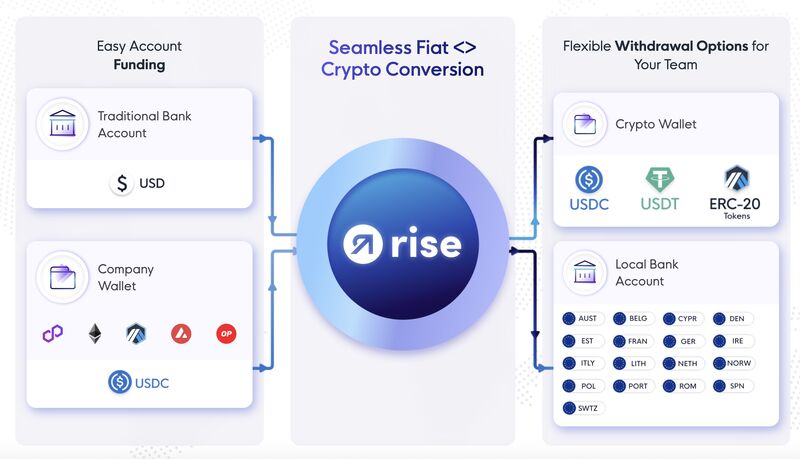
Rise’s hybrid fiat and crypto payroll is the core infrastructure powering Rise products:
Fund payroll using USD or USDC/USDT
Automatic fiat–crypto conversion handled by Rise
Instant mass payouts
Multi-chain support: Ethereum, Polygon, Arbitrum, Avalanche, Optimism
Smart-contract automation for Web3 teams
This is especially relevant for companies paying a distributed workforce, because payout preferences vary by individual, and operational consistency matters more than one-off exceptions.
Rise standardizes that experience without taking choice away from workers, which is particularly important when internal technology stacks span multiple geographies and funding rails.
Security And Compliance Foundations (Non-Negotiables For Payroll Safety)
Payroll safety is not only about classification and taxes. It is also about platform security and compliance posture.
Rise is:
SOC 2 certified
GDPR compliant
Supports multi-factor authentication (MFA)
Uses high-level encryption
A legally registered Money Service Business (MSB) with FinCEN (including registrations listed in Rise documentation)
For teams hiring across borders, these controls support stronger internal governance around onboarding, identity verification, and payment execution.
Repeatable Workflows: The Safest Way To Scale LATAM Hiring Using Rise
If the goal is hire multiple developers in LATAM without increasing payroll risk each time, the best approach is to standardize the workflow.
Rise provides clear, repeatable workflows for each model.
1. Contractor Payroll Workflow
Invite contractor
Contractor completes onboarding and KYC (self-service)
Employer funds payroll (USD or USDC/USDT)
Schedule payments
Contractor chooses withdrawal currency (fiat, stablecoins, crypto, or mix)
Rise handles compliance and tax forms
Payouts occur automatically
2. EOR Workflow
Add employee details
Rise handles compliance, taxes, and contracts
Employer funds payroll
Rise runs payroll per local rules
Employee withdraws fiat or crypto
3. AOR Workflow
Add contractor
Rise handles classification support and agreements
Contractor completes onboarding
Payments follow the hybrid payroll flow
What The Worker Experience Looks Like (Why This Matters For Risk)
A predictable worker experience reduces operational exceptions that can create audit gaps.
For employees joining Rise:
Stage 1: account setup via invitation, “Join as a payee,” onboard as an individual, complete KYC, verify identity, create a signing passkey
Stage 2: complete action items such as health insurance enrollment form, tax declaration form, and employment agreement
Stage 3: get paid via “Everyday Pay,” with earnings available daily and funds arriving midnight GMT on workdays; workers can use direct deposit or manually withdraw; multiple bank accounts and crypto wallets can be added; pay can be split by percentage across accounts
Stage 4: benefits enrollment including health insurance (managed through Ease) and 401(k) (managed through ForUsAll, with enrollment one month into using Rise)
Stage 5: support is available through Rise at hello@riseworks.io
This matters because payroll risk is often created by off-platform exceptions, missing steps, and ad-hoc data handling.
A structured flow keeps hiring compliant and repeatable, especially when teams rely on distributed experts and scalable operational patterns instead of ad-hoc outsourcing decisions.
Conclusion
Hiring developers in LATAM without payroll risk is primarily a systems problem: choose the right engagement model, enforce a consistent onboarding and documentation process, and operate payments through an auditable workflow.
Rise is designed to standardize that entire lifecycle with our contractor payroll, AOR protections, and EOR employment, while letting workers choose whether to withdraw in local currency, stablecoins, crypto, or a mix.
Book a demo to see how Rise can support your hiring workflow end to end.
FAQs:
1. What is payroll risk when hiring in Latin America?
Payroll risk is exposure created by misclassification, missing or inconsistent compliance documentation, incomplete identity verification, and payment operations that lack auditability.
2. How does Rise reduce misclassification risk for developer hiring?
Rise supports contractor, AOR, and EOR models. AOR is designed to protect companies from misclassification risk by making Rise the legal contracting entity and managing agreements, KYC/AML, identity verification, and tax documentation.
3. Who controls payout currency in Rise?
Employers fund payroll, but workers control their withdrawal currency. Contractors, employees, and contributors can choose to withdraw in local fiat, USDC, USDT, other supported crypto assets, or a hybrid split each cycle.
4. What is the safest onboarding approach for remote technical hires?
A standardized, self-service onboarding flow reduces sensitive-data handling and creates clean audit trails. With Rise, employers only send an invite for contractors, while contractors complete onboarding, identity verification, and payout setup themselves.
5. What should companies prioritize when evaluating hiring options in LATAM?
Prioritize model fit (contractor vs AOR vs EOR), documentation consistency, identity and tax workflow automation, and operational controls that scale without exceptions. If the role requires long-term, employee-like management, an employment-aligned model typically lowers structural risk.
6. What makes a remote team setup durable beyond compliance checklists?
Durability comes from consistent workflows, secure access controls, and clear agreements that match how work is performed, paired with hiring standards like english proficiency where relevant to collaboration and delivery quality, and a repeatable approach to building regional talent pipelines.