
How to Complete KYC and AML for International Contractors
KYC (Know Your Customer) and AML (Anti-Money Laundering) are absolutely crucial components of hiring international contractors.
Without following these compliance standards, companies face significant risks, including penalties, fraud, and security breaches.
As global workforces expand, navigating the regulatory landscape becomes increasingly complex.
This is where Rise comes in, streamlining KYC and AML processes to make hiring international contractors safer and easier.
Understanding KYC and AML Requirements for International Contractors
What is KYC?
KYC, or Know Your Customer, refers to the process of verifying the identity of clients to prevent illegal activities like fraud and money laundering.
It involves confirming identification documents, proof of address, and other information to ensure that contractors are who they say they are.
When the counterparty is a company rather than an individual, the equivalent process is KYB, and platforms like Know Your Customer handle it by verifying a business's registration and ownership against 140+ official registries before the relationship begins.
What is AML?
Anti-Money Laundering (AML) involves a set of procedures and regulations intended to prevent criminals from disguising illegally obtained funds as legitimate income.
AML protocols are critical to stopping the flow of illicit financial activities and maintaining the integrity of global business transactions.
Why These Processes Matter for Businesses
Non-compliance with KYC and AML regulations can lead to serious consequences for businesses.
These include substantial fines, potential legal action, and severe damage to a company’s reputation.
Ensuring that international contractors are properly vetted protects businesses from these risks and builds trust in the hiring process.
The Challenges of KYC and AML for International Hiring
Compliance Complexity
KYC and AML regulations vary significantly from one country to another, which makes compliance challenging, especially for companies working with international contractors.
Keeping up with different regulatory standards can be a daunting and error-prone process.
Manual Processes are Time-Consuming
Manually gathering, verifying, and maintaining compliance documentation can be extremely labor-intensive.
Each contractor may need to provide different types of documents, which require careful handling and review, adding considerable strain to HR teams.
Risk of Errors and Fraud
Manual and unstructured KYC processes are susceptible to errors and inconsistencies, leading to incomplete verification.
These vulnerabilities open the door to fraud, putting businesses at risk of financial loss and non-compliance penalties.
Rise’s Automated Onboarding and Verification Process
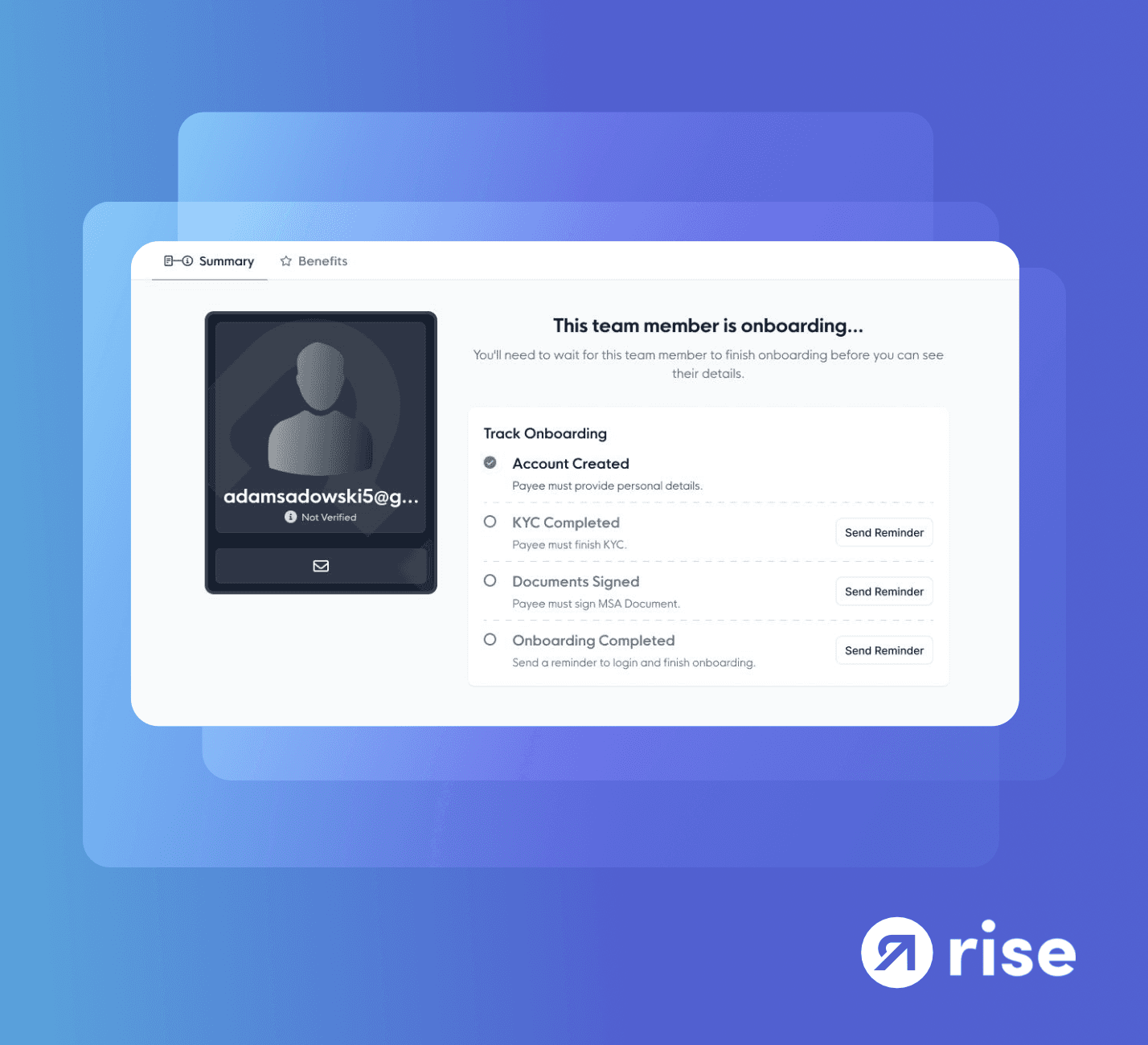
Invitation and Identity Verification
With Rise, the process of onboarding and verifying contractors is streamlined and automated.
When a business invites a contractor to the Rise platform, the contractor undergoes a comprehensive identity verification process that eliminates manual paperwork.
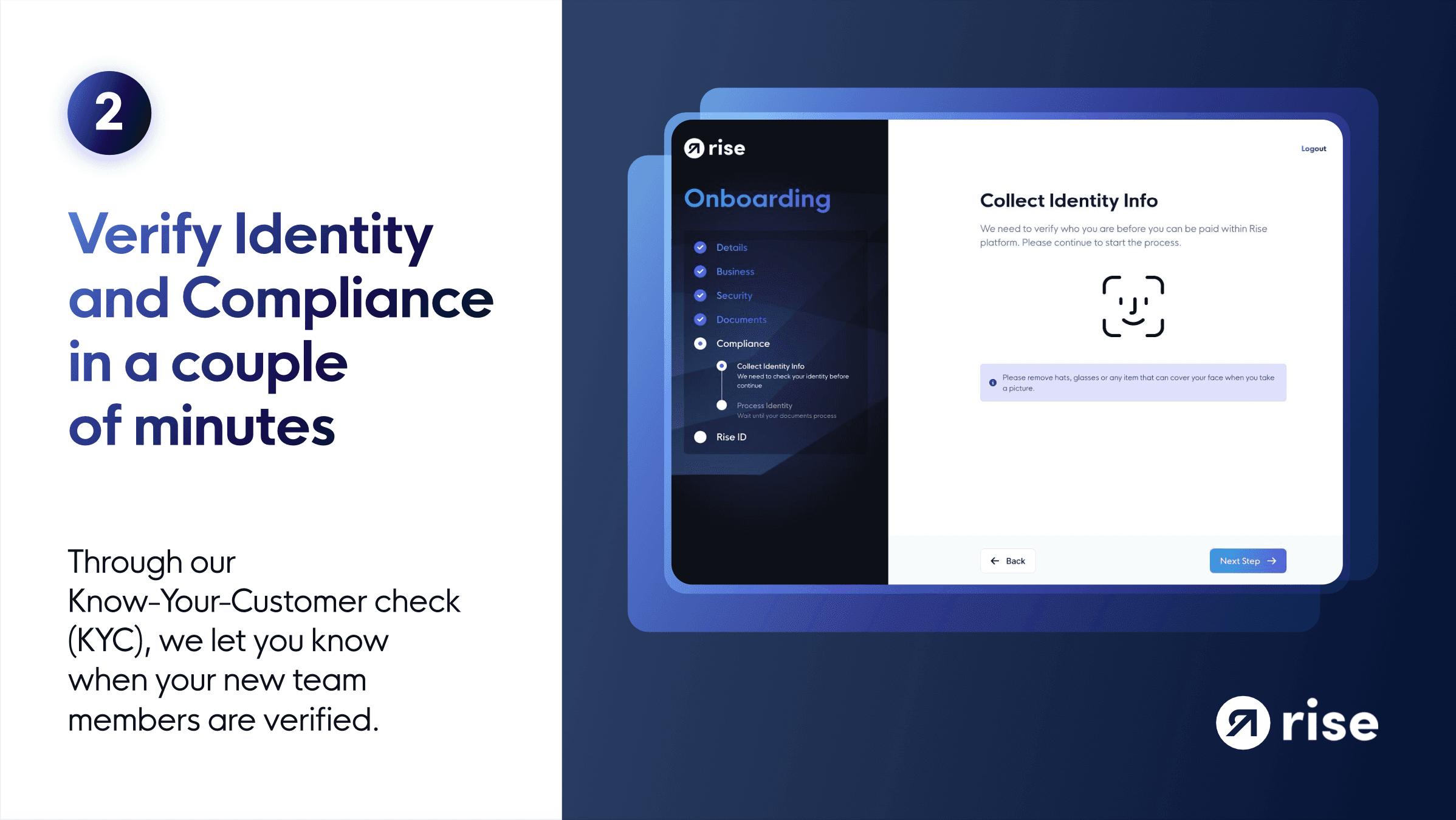
Identity and Address Verification
Contractors are prompted to provide necessary identification documents, including proof of address.
Rise then verifies these documents for authenticity and accuracy, ensuring that the contractor’s information is valid and reliable.
Biometric Verification
Rise leverages biometric technologies to perform a liveness check and face match, ensuring that the contractor is physically present and matches the identification documents provided.
This additional layer of verification provides greater security and trust.
AML Screening
Rise’s automated AML screening process checks contractors against global sanctions and watchlists to identify any potential risks.
This screening ensures that businesses can comply with international AML standards effortlessly.
Learn more about how Rise integrates with Sumsub for verification services.
Email and IP Verification
Rise also verifies contractors’ email addresses and IP locations to detect inconsistencies or potential fraud indicators, adding another level of security to the verification process.
Compliance Documentation with Rise
Automated Document Generation
Rise takes the headache out of compliance documentation by automating the generation of critical documents, including professional service agreements and tax forms such as W-9 and W-8BEN.
These documents are tailored to the contractor’s country and specific requirements, ensuring compliance without manual intervention.
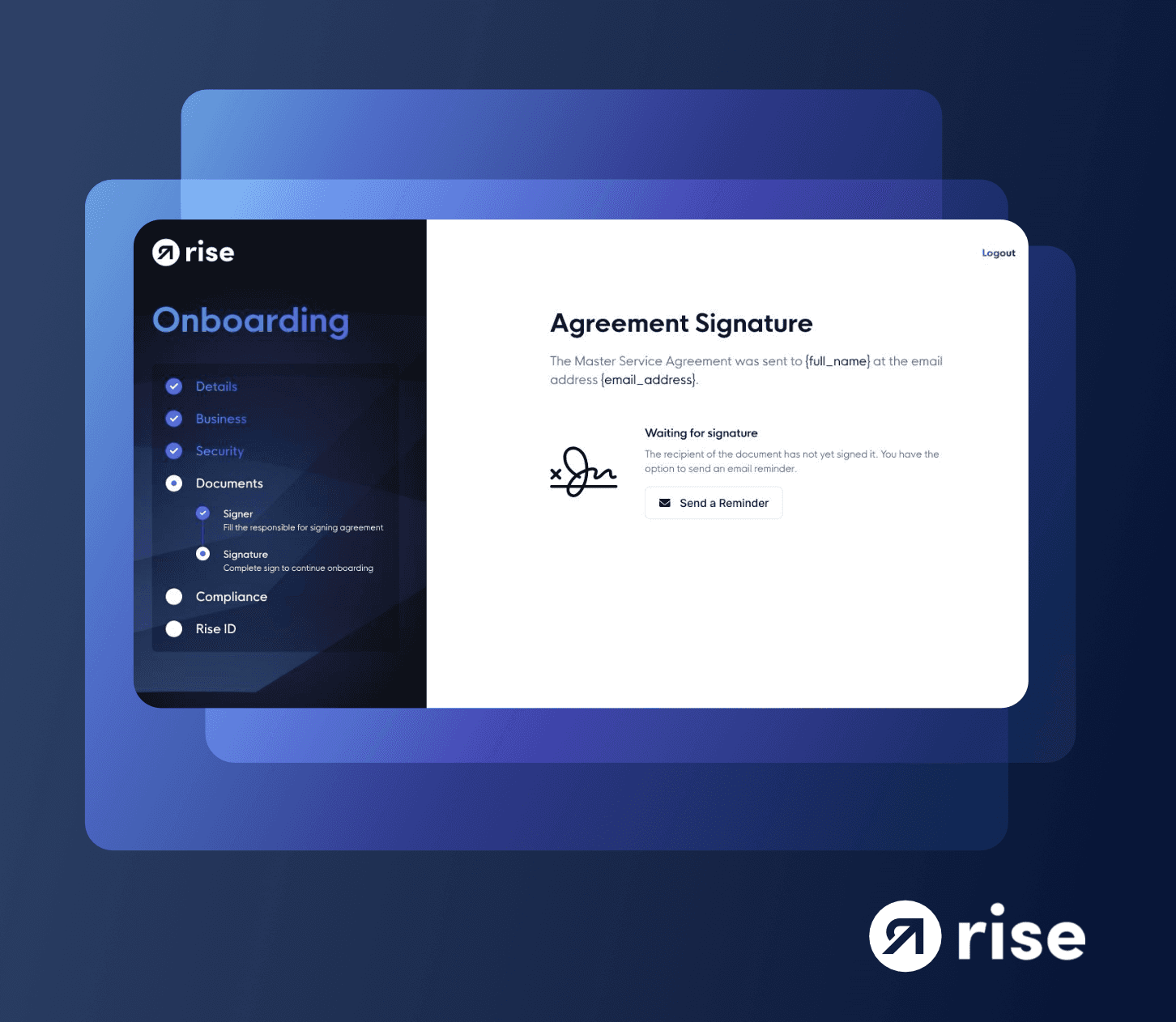
Digital Signatures for Compliance
All compliance documents are signed digitally through the Rise platform, simplifying the process and ensuring that businesses have legally binding records of all agreements.
Payments Made Easy and Secure
Rise Digital Wallet and Payment Preferences
After contractors complete the onboarding process, they receive a unique Rise ID and a digital wallet address.
Contractors can link their bank accounts and choose their preferred payment method, ensuring that all transactions are transparent and secure.
Flexible Payment Options
Rise supports payments in both fiat currencies and cryptocurrency, giving contractors the flexibility to choose the payment method that best suits their needs while maintaining full compliance with financial regulations.
This flexibility makes Rise an ideal solution for international contractors.
Learn more about crypto payroll and hybrid payroll.
Ongoing Monitoring and Reporting
Continuous Monitoring
KYC and AML compliance is not a one-time task.
This helps businesses stay ahead of compliance requirements and maintain their reputation.
Real-Time Alerts
Rise’s monitoring system offers real-time alerts whenever there are changes or updates in compliance status, helping businesses take timely action to address potential issues before they escalate into major risks.
Learn how Rise’s real-time compliance monitoring helps businesses stay compliant and secure.
Conclusion
Rise’s automated KYC and AML compliance solution makes hiring international contractors easier, faster, and safer.
By eliminating manual processes, reducing errors, and offering ongoing monitoring, Rise reduces the risks and administrative burdens typically associated with KYC and AML compliance.
To see how Rise can transform your international hiring process, book a demo today and experience the benefits firsthand.
FAQ
Can a US company hire an international contractor?
Yes, a US company can hire an international contractor, provided they comply with international tax, KYC, and AML regulations to ensure all legal and financial standards are met.
How to pay contractors outside the US?
You can pay contractors outside the US by utilizing platforms like Rise that support multiple payment methods, ensuring compliance with financial regulations specific to each contractor’s location.
Is KYC worldwide?
Yes, KYC is implemented worldwide, adapting to specific regulations of different jurisdictions to prevent fraud and ensure secure business transactions globally.