
Top 10 Reasons Rise's EOR Is Better Than Rippling for Global Teams in 2026
Rise’s EOR is better than Rippling for global teams in 2026 when the priority is compliant international hiring plus flexible payroll execution.
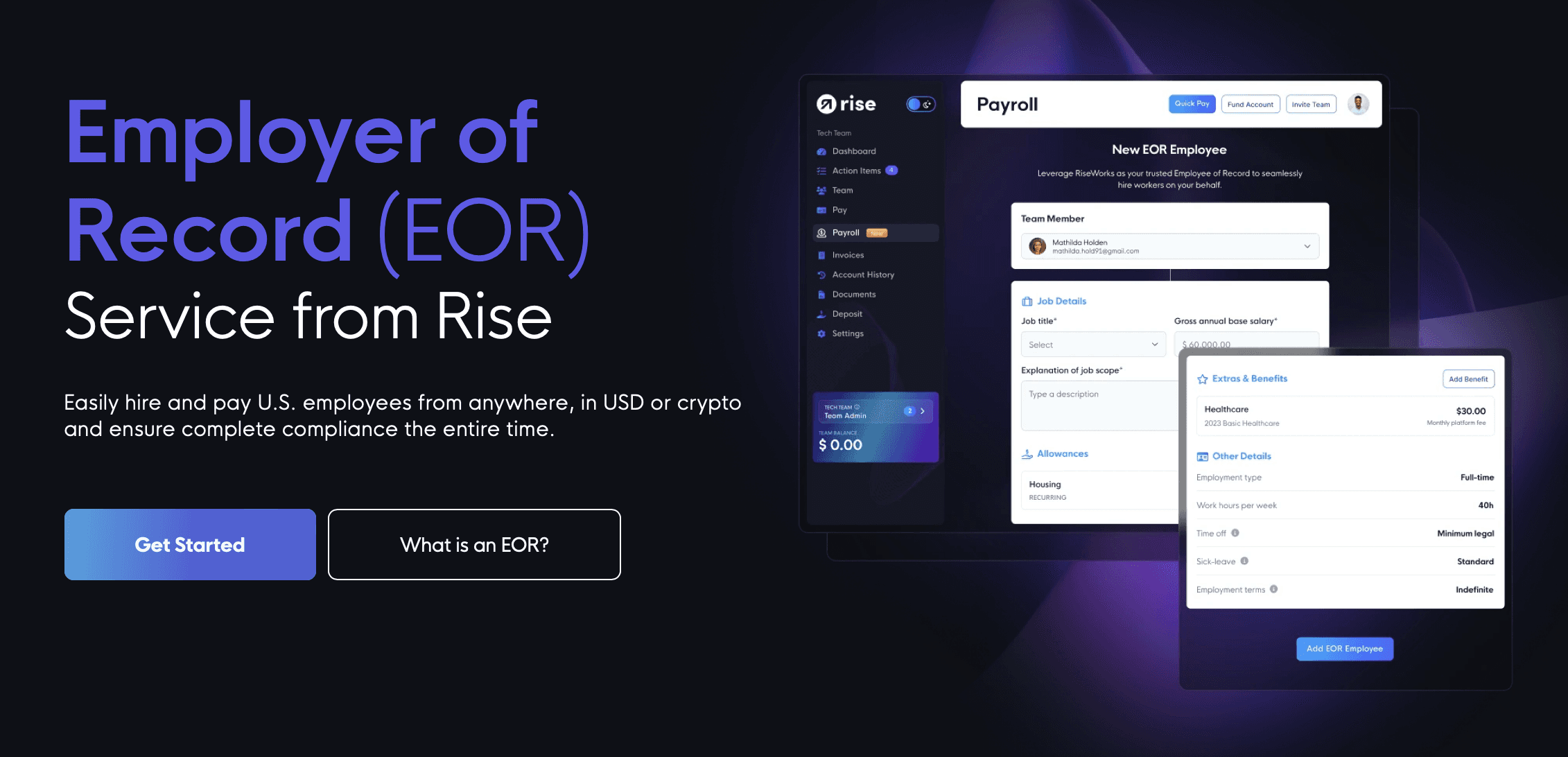
Rise publicly lists Employer of Record pricing from $399 per employee per month and positions its EOR around hiring full-time employees without local entities, paying in local currency or crypto, and supporting health and tax benefits, while Rippling’s public EOR page emphasizes a broader workforce software suite and custom pricing rather than the same simple published EOR starting price.
That difference matters because this comparison is not only about legal employment. It is about whether a global team wants an EOR tied to flexible payroll funding and payout infrastructure, or an EOR embedded inside a larger HR, IT, and finance operating system.
Rise stands out because its public positioning is more directly aligned with global teams that care about how payroll is funded, how workers get paid, and how international hiring scales without unnecessary software complexity.
Key Takeaways
Rise’s EOR stands out with a clear published starting price of $399 per employee per month, while Rippling routes buyers to custom quotes.
Rise is better than Rippling for global teams that want flexible payroll funding, crypto-compatible payout infrastructure, and EOR inside a payroll-first model.
Rippling is stronger as a broader workforce software suite, but Rise is better for teams that want EOR and modern global payroll execution in one focused system.
Top 10 Reasons Rise’s EOR Is Better Than Rippling for Global Teams in 2026
1. Rise Has Clearer Published EOR Pricing
Rise publicly lists EOR pricing from $399 per employee per month, which gives buyers an immediate benchmark during evaluation.
Rippling’s public pricing page sends buyers to a custom quote flow, so Rise offers a more transparent starting point for global teams comparing options quickly.
2. Rise Is More Payroll-First Than Suite-First
Rise positions its EOR inside a global payroll model built around hiring, paying, and staying compliant across borders.
Rippling positions EOR inside a much broader workforce platform that spans HR, IT, finance, and operations, which is valuable for some buyers but less focused for teams that mainly need international hiring and payroll execution.
3. Rise Supports More Flexible Payroll Funding
Rise’s current 2026 EOR and payroll-related messaging says employers can fund payroll through bank transfer or USDC/USDT, which creates more treasury flexibility for international teams.
Rippling’s public EOR materials emphasize global hiring, onboarding, compliance, payroll, and support, but they do not foreground the same crypto-compatible funding model.
4. Rise Gives Global Teams More Payout Flexibility
With Rise’s EOR companies can hire and pay full-time employees in local currency or crypto, which is a direct differentiator for globally distributed teams.
Rippling’s public EOR positioning is stronger on standard employment infrastructure, while Rise stands out by connecting EOR more clearly to flexible payout rails.
5. Rise Is Better for Crypto-Native and Treasury-Flexible Teams
Rise’s public positioning is more directly aligned with Web3 companies, fintech teams, and global businesses that already think about payroll as a treasury function, not only an HR task.
Rippling is broader as enterprise workforce software, but Rise is better suited to companies that want compliance plus stablecoin and crypto-ready payroll operations.
6. Rise Reduces Friction for Bottom-Funnel Buyers
A global team comparing EOR providers can understand Rise’s offer quickly: published EOR pricing, entity-free hiring, local-currency-or-crypto payroll, and benefits support.
Rippling may still be attractive, but its suite breadth and custom pricing create a more layered buying process than Rise’s more focused EOR pitch.
7. Rise Better Connects EOR to Broader Global Payroll Execution
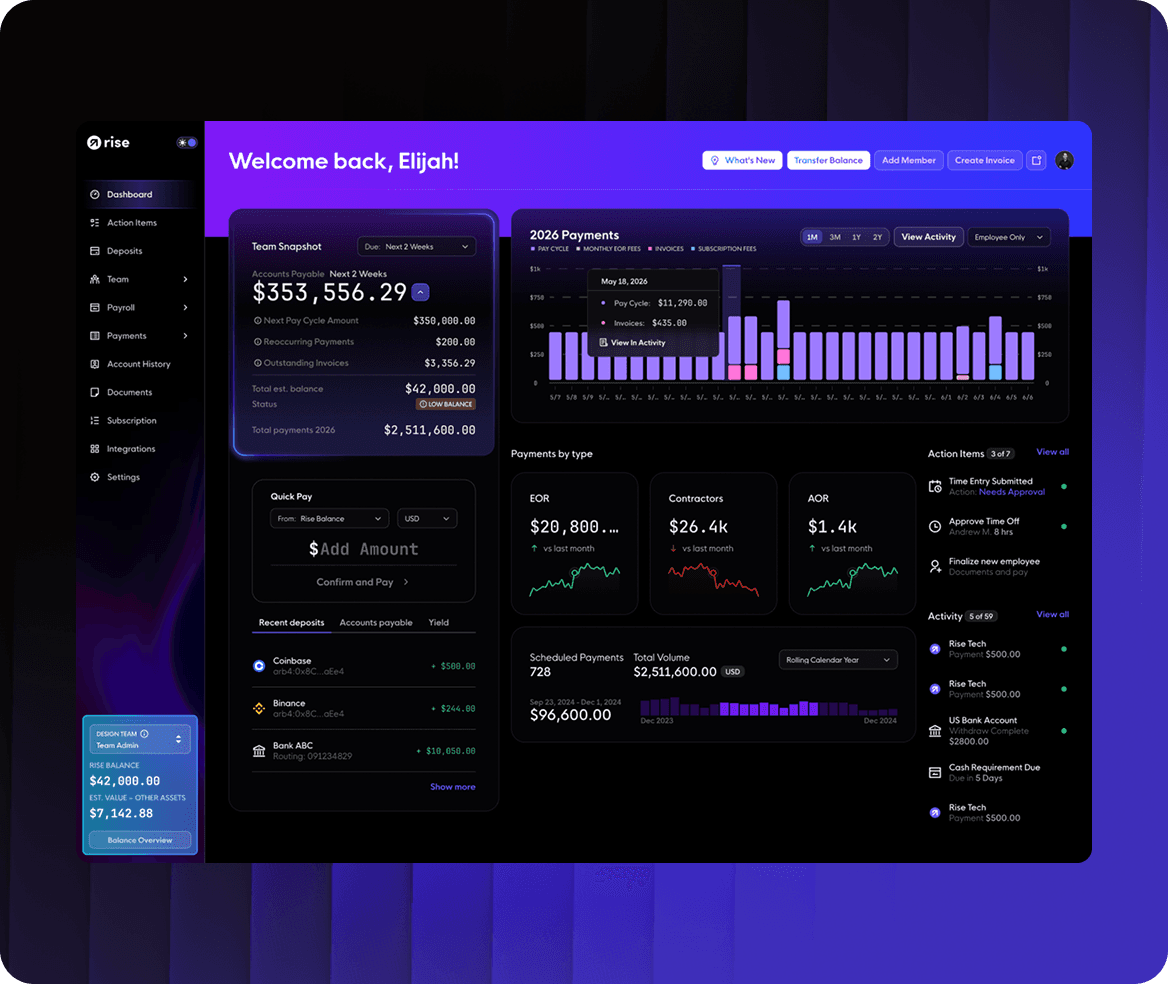
Rise’s current platform messaging ties together contractor payouts, payroll automation, and EOR expansion, including a stated target of 60+ EOR countries by the end of 2026.
Rippling also supports global hiring and payroll, but Rise stands out by framing EOR as part of a payroll-first system designed around how cross-border payments actually move.
8. Rise Is Better for Teams That Do Not Want a Full Platform Migration
One of Rippling’s strengths is that it can become a company-wide operating system across HR, IT, and finance.
That same strength can also make it a heavier decision, while Rise is easier to adopt for teams that want to solve international hiring and payroll without committing to a full workforce software migration.
9. Rise Makes a Stronger Case for Mixed Global Workforces
Rise’s broader platform supports global contractor payroll, Agent of Record, and EOR, which makes it easier to position for companies that hire both contractors and employees internationally.
Rippling also serves multiple workforce needs, but Rise stands out by connecting those models more directly to global payment flexibility.
10. Rise Treats Employment and Payments as One Strategic Layer
This is the clearest reason Rise’s EOR is better than Rippling for the right buyer.
Rippling’s public EOR story is strong inside a larger software suite, but Rise’s public positioning more clearly treats compliant hiring, payroll funding, and worker payouts as one connected international operations layer.
Conclusion
Rise’s EOR is better than Rippling for global teams in 2026 when the real priority is not just hiring internationally, but hiring internationally with more payroll flexibility, clearer pricing, and stronger payout optionality.
Rippling remains a strong choice for companies that want a broader workforce software suite, but Rise stands out for global teams that want a more focused EOR product built around modern payroll execution.
For teams comparing Employer of Record providers and looking for a platform that combines compliant hiring with flexible global payroll infrastructure, Rise presents the stronger fit.
Book a demo to see how Rise’s EOR can support your team across international hiring, payroll, and cross-border payouts.
FAQs:
1. Why is Rise’s EOR better than Rippling for global teams in 2026?
Rise’s EOR is better than Rippling for global teams in 2026 when the priority is compliant hiring plus flexible payroll execution. Rise publicly combines EOR with clearer starting pricing, bank transfer or USDC/USDT payroll funding, and employee payout flexibility across local currency or crypto, while Rippling positions EOR inside a broader workforce software suite.
2. Is Rise cheaper than Rippling for EOR in 2026?
Rise publicly lists EOR pricing from $399 per employee per month on its Employer of Record page and pricing page. Rippling’s public EOR page emphasizes product capabilities and demo-led sales, but it does not surface the same simple starting EOR price on the main page, so Rise has the clearer published pricing story.
3. What is the main difference between Rise and Rippling EOR?
The main difference is product architecture. Rise positions EOR inside a payroll-first global employment model, while Rippling positions EOR inside a larger platform that also covers HR, payroll, IT, and workforce operations.
4. Why does Rise stand out more for payroll flexibility?
Rise publicly says employers can fund payroll through USD bank transfer or USDC/USDT, and its broader platform supports paying teams in local currencies and cryptocurrencies. That makes Rise more relevant for companies that want payroll flexibility as part of the EOR decision, not just legal employment infrastructure.
5. Is Rise better than Rippling for crypto-native or treasury-flexible companies?
Yes. Rise is better suited to crypto-native, fintech, and treasury-flexible teams because its public messaging directly supports stablecoin funding and crypto payout flows. Rippling remains strong as a broader software suite, but Rise is more directly aligned with companies that treat payroll as both a compliance function and a money-movement function.
