
Rise's Payroll Solutions for Blockchain Employees
When it comes to blockchain, innovation is everywhere, but when it comes to payroll, many companies are still stuck in the past.
Managing compensation for blockchain employees, especially those working remotely, across borders and preferring crypto payments, presents a unique set of finance challenges that can be efficiently tackled using blockchain technology.
That’s where we come in.
At Rise, we’ve built a modern, crypto-native payroll platform designed specifically for the future of work, fast, secure and globally compliant.
Key Takeaways
Blockchain professionals demand flexible, crypto-native payroll solutions.
Rise supports hybrid payments in fiat and crypto.
Compliance is built-in.
Teams save time and money.
Trusted by the Web3 ecosystem.
Understanding the Unique Needs of Blockchain Employees
The blockchain workforce is unlike any other.
According to LinkedIn, demand for blockchain-related roles grew by over 395% in a single year, with talent distributed across more than 50 countries.
These aren’t just developers, they’re marketers, community managers, designers and crypto analysts powering decentralized ecosystems.
A recent Deloitte study found that 46% of blockchain professionals prefer to receive part or all of their compensation in cryptocurrency.
Meanwhile, 65% of Web3 workers operate remotely, often from different legal jurisdictions than their employers.
Traditional payroll systems weren’t built for this kind of global, flexible workforce, especially considering the complexities of governance, managing a ledger of crypto payments and incorporating finance management.
How Rise Redefines Payroll for the Blockchain Workforce

Our mission at Rise is simple, empower the modern workforce with seamless, secure and compliant payroll, no matter where your team is located or how they choose to get paid.
Multi-Currency, Hybrid Payroll: Whether your team prefers USDC, USDT, ETH, +100 other cryptocurrencies or local fiat currencies, Rise supports it all.
We enable instant, scalable mass payouts, from five contributors to five hundred, with just a few clicks.
Global Compliance, Local Expertise: We support compliant payroll operations in over 190 countries.
From employment contracts to tax documentation and benefits, we handle the heavy lifting so you can stay focused on growth.
Verified On-Chain Identity with Rise ID: Every professional on our platform is equipped with a secure, verified on-chain identity.
This enables trusted, transparent collaboration and eliminates onboarding bottlenecks.
End-to-End Security & Regulatory Alignment: Built-in KYC/AML checks, automatic tax calculations and smart contract integrations ensure every payment is secure and legally compliant.
We help you mitigate the risks of cross-border hiring, without the red tape.
Plug & Play Integrations for Web3 Teams: Rise connects with popular blockchain ecosystems, wallets and DAOs.
From contract creation to treasury payouts, we streamline every step of the workflow.
Our system is designed to eliminate the friction that often slows down payroll operations in fast-moving Web3 environments, helping teams stay agile and focused on innovation.
Related: Daily Payroll
Why Leading Blockchain Companies Choose Rise
Our clients consistently report measurable benefits.
By automating onboarding, payments and compliance, Rise helps reduce administrative overhead by up to 60%.
What used to take days now takes minutes.
A Web3 gaming studio could cut their average payout processing time from 72 hours to under 10 minutes after switching to Rise.
A DeFi protocol using our crypto-first infrastructure could save over $25,000 annually in transaction fees.
And it's not just leadership that sees the upside, contributors love the flexibility.
With Rise, they choose how and when they’re paid, in the currency that suits them best.
These improvements translate directly into better retention, reduced churn and higher satisfaction across global contributor teams.
Success Stories and Client Testimonials
Here is what our clients, including the chief executive officers, are saying about us:
"What appealed to me with Rise was the fact that all the payments were handled through a smart contract. Rise had a closed system and rules in place for how funds were going to be handled. Having the web interface versus the Google spreadsheet was appealing as well.” - Zen Academy Founder
"With Rise, we can handle the process of onboarding contractors, streamlining compliance, routing fiat to crypto and automating payroll in a one stop shop solution." - t3rn Head of Operations
How to Start Using Rise
Even if you're already using a payroll app, switching over to Rise and onboarding your contractors and blockchain employees to the platform is extremely easy.
Here's how it's done:
Step 1: Sign Up with a Business Account
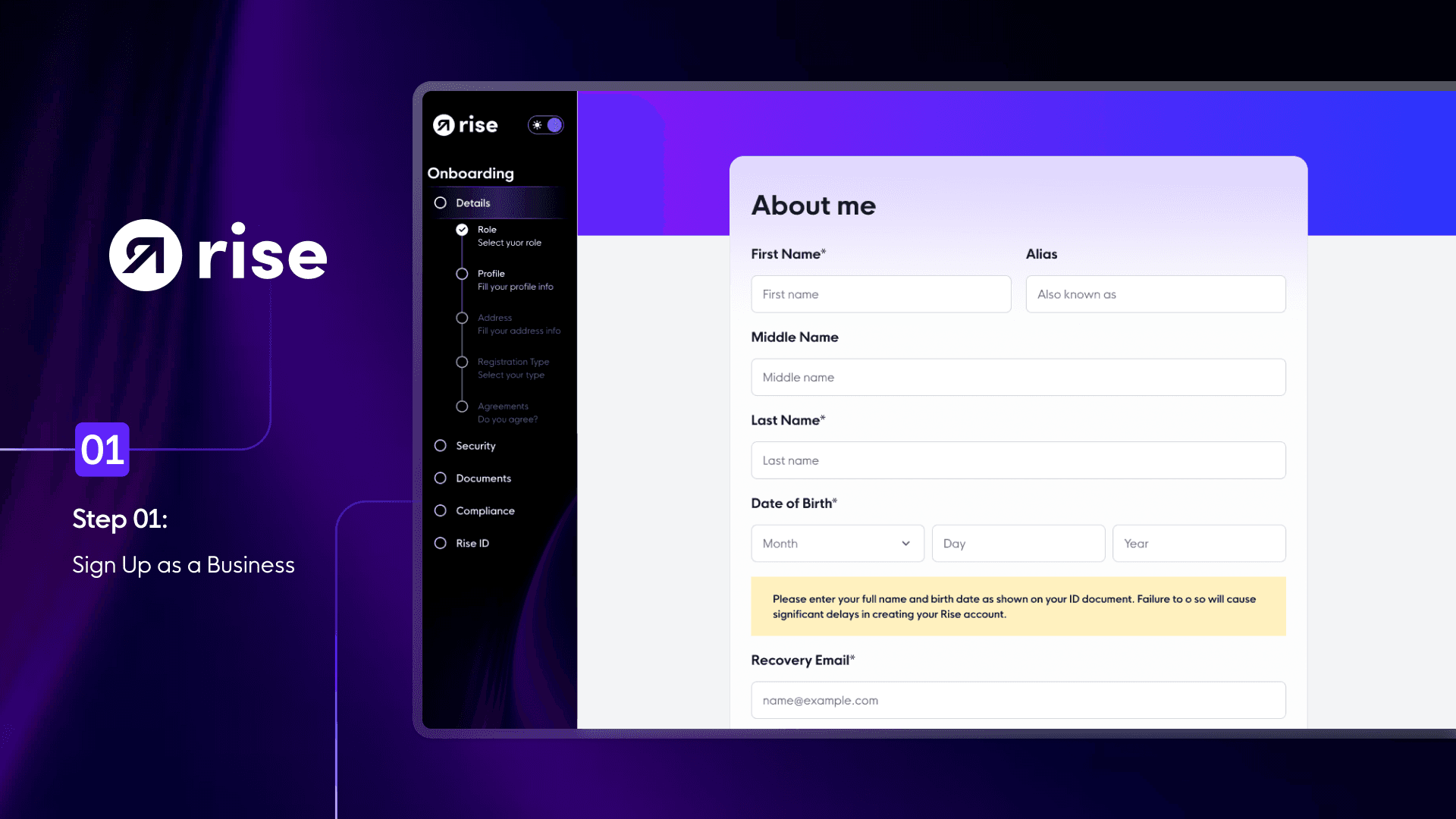
Head over to Rise and register for a business account by entering essential company details, such as your business name, address and contact information.
Once registered, you'll need to complete a verification process to ensure the security and compliance of your account, which might require submitting additional documents or business information.
By following these steps, fintech companies can quickly integrate Rise into their operations and start experiencing its benefits.
Step 2: Invite and Onboard Your Contractors
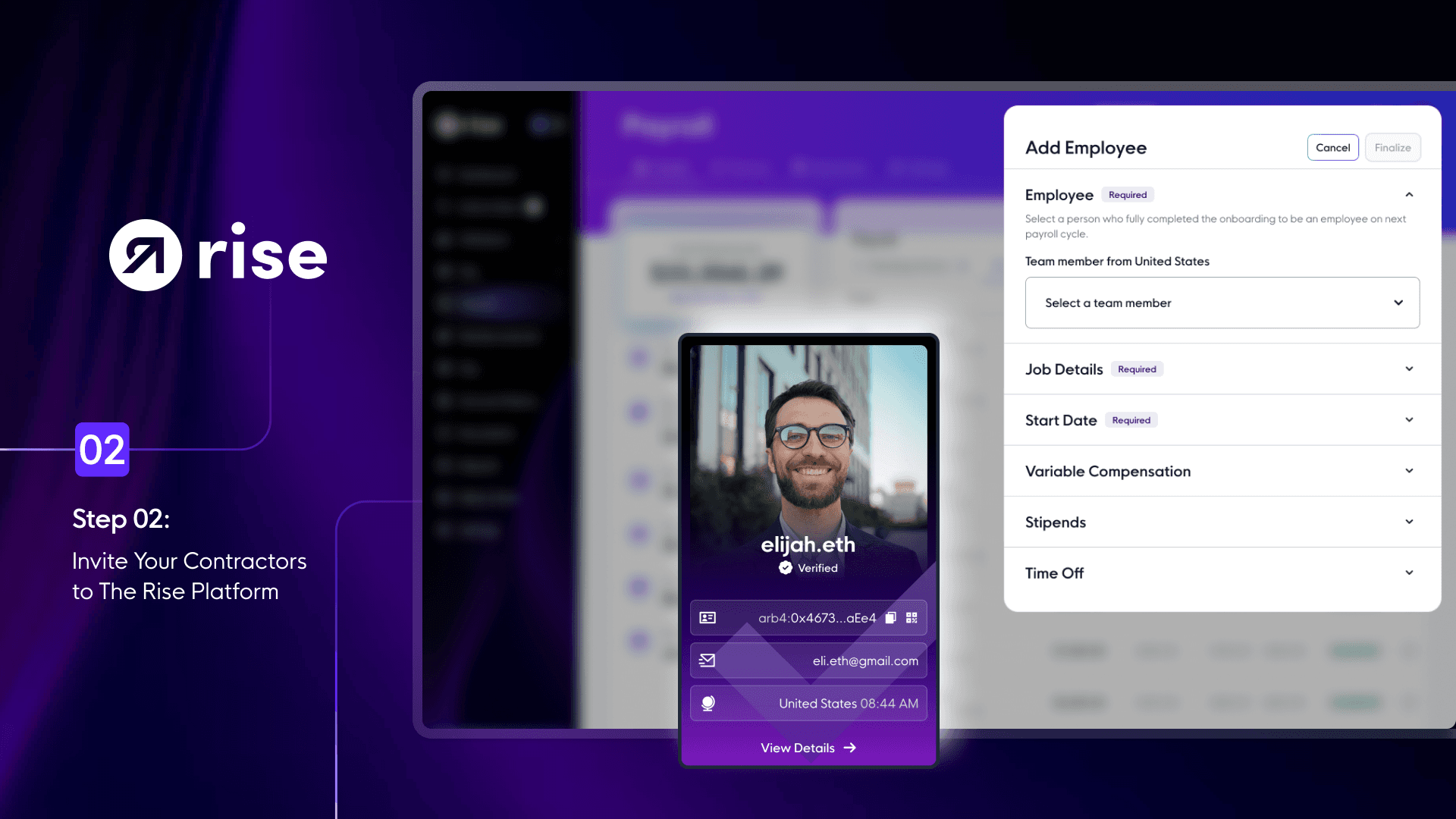
The next step is to invite your contractors to join the Rise platform by sending them an email invitation, enabling them to engage seamlessly with smart contracts.
Your contractors will then be onboarded swiftly and compliantly, undergoing KYC checks and identity verification.
They will receive a unique Rise ID, a digital wallet address, and the ability to set up their preferred payment methods for withdrawals.
Step 3: Fund Your Payroll
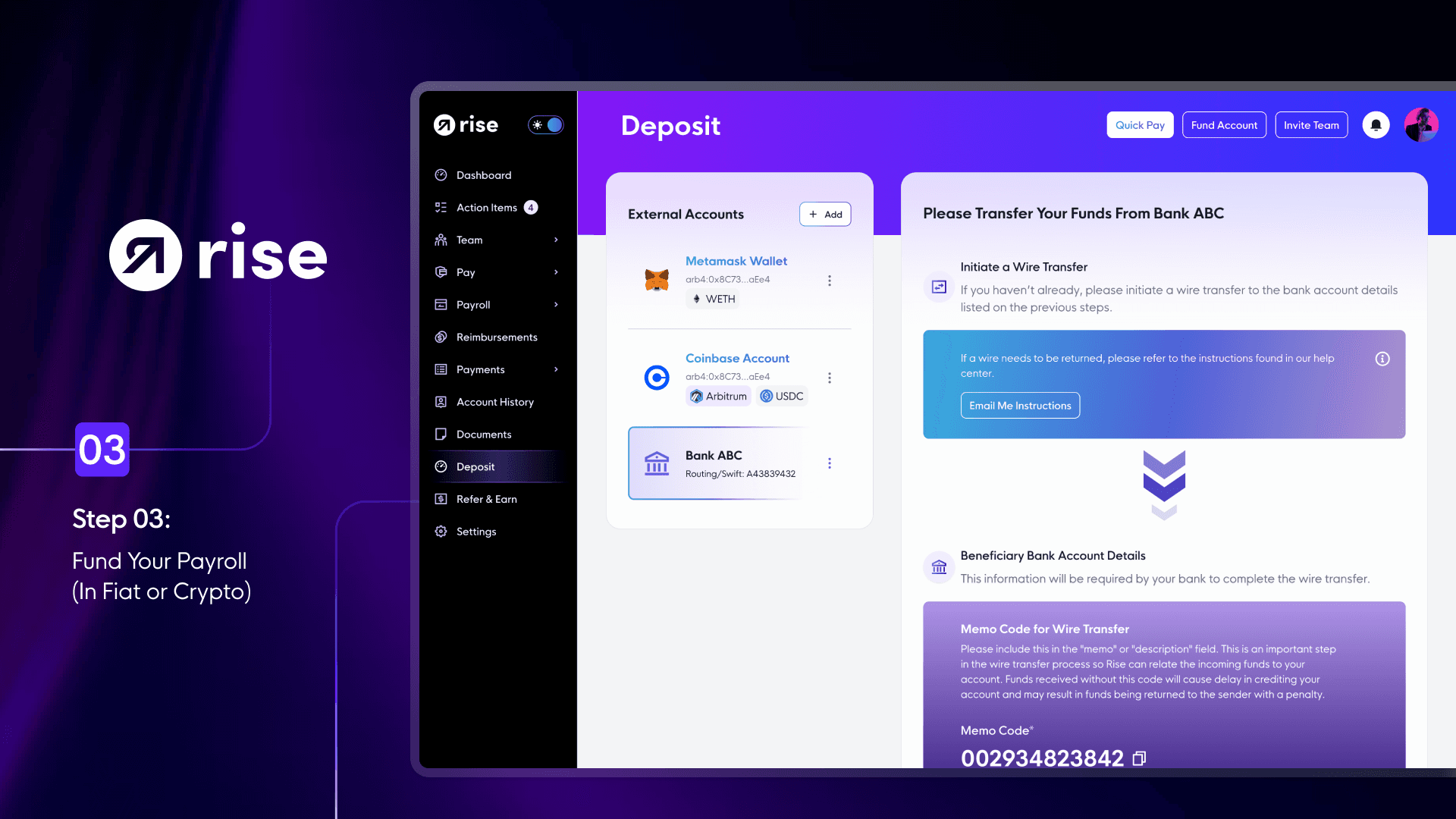
Rise provides employers with the unique option to fund payroll in either US dollars or USDC stablecoin, allowing global employers to bypass traditional banking limitations.
If you opt to fund in USDC, you can utilize any of our integration partners, including Arbitrum, Coinbase, Uniswap, Ethereum, Metamask, Avalanche, Gnosis Safe, Optimism, Polygon, MEW and Torus.
Once the funds are available, you can easily allocate them to your payroll needs within the Rise platform, setting up automated payments in either fiat or cryptocurrency according to your payroll setup.
Step 4: Choose Payment Schedules
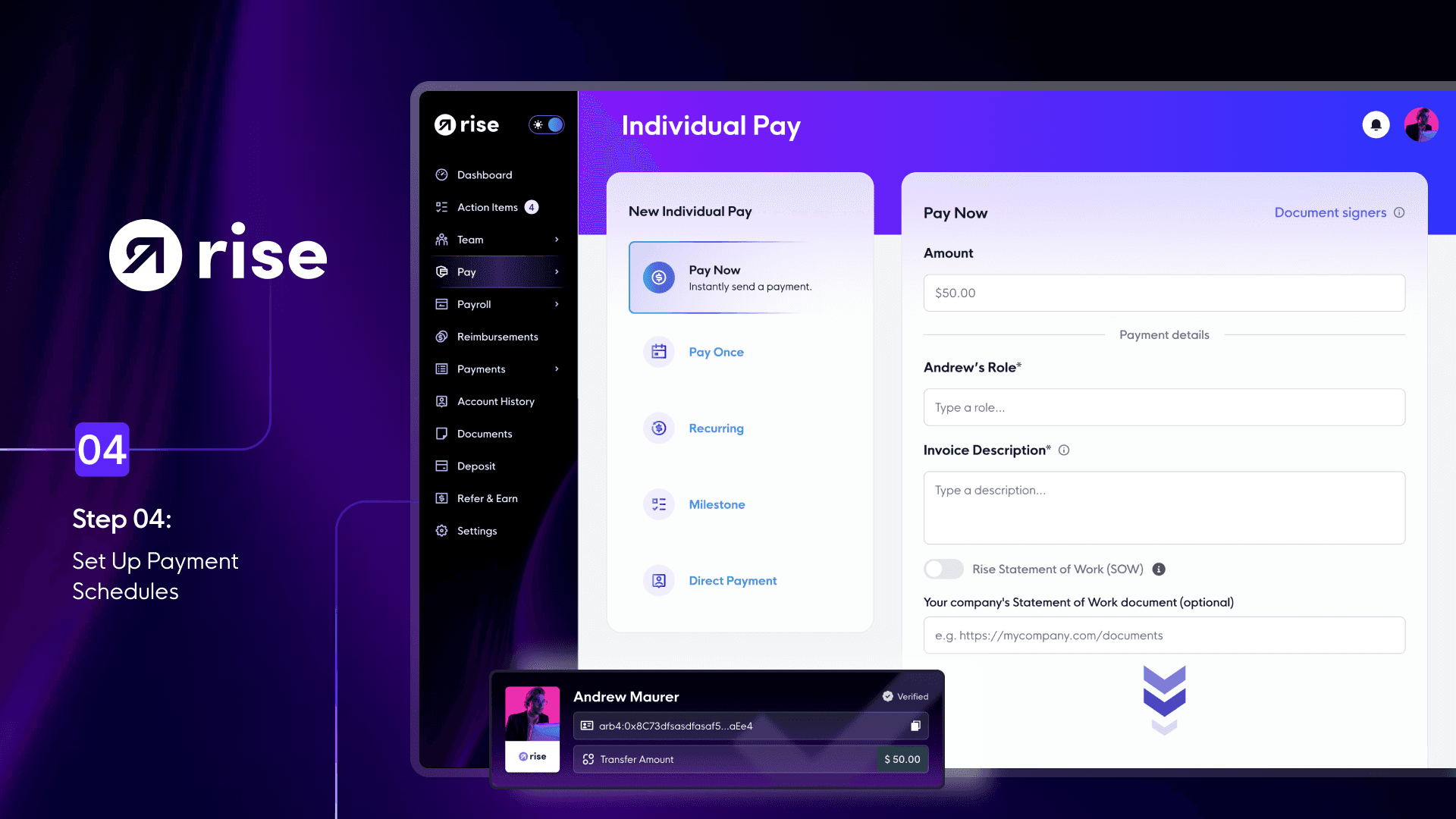
Within the Rise platform, you can set up payment schedules that align with your business operations, whether that’s weekly, bi-weekly, monthly, or custom intervals.
This flexibility allows you to synchronize payroll disbursements with your company's cash flow and contractor expectations.
Additionally, Rise offers the ability to automate these payments, ensuring your contractors receive their earnings on time, every time, without manual intervention, thereby reducing administrative workload and enhancing payment accuracy.
Learn more about auto payroll from Rise.
Step 5: Contractors Withdraw in Their Preferred Currency (Fiat or Crypto)
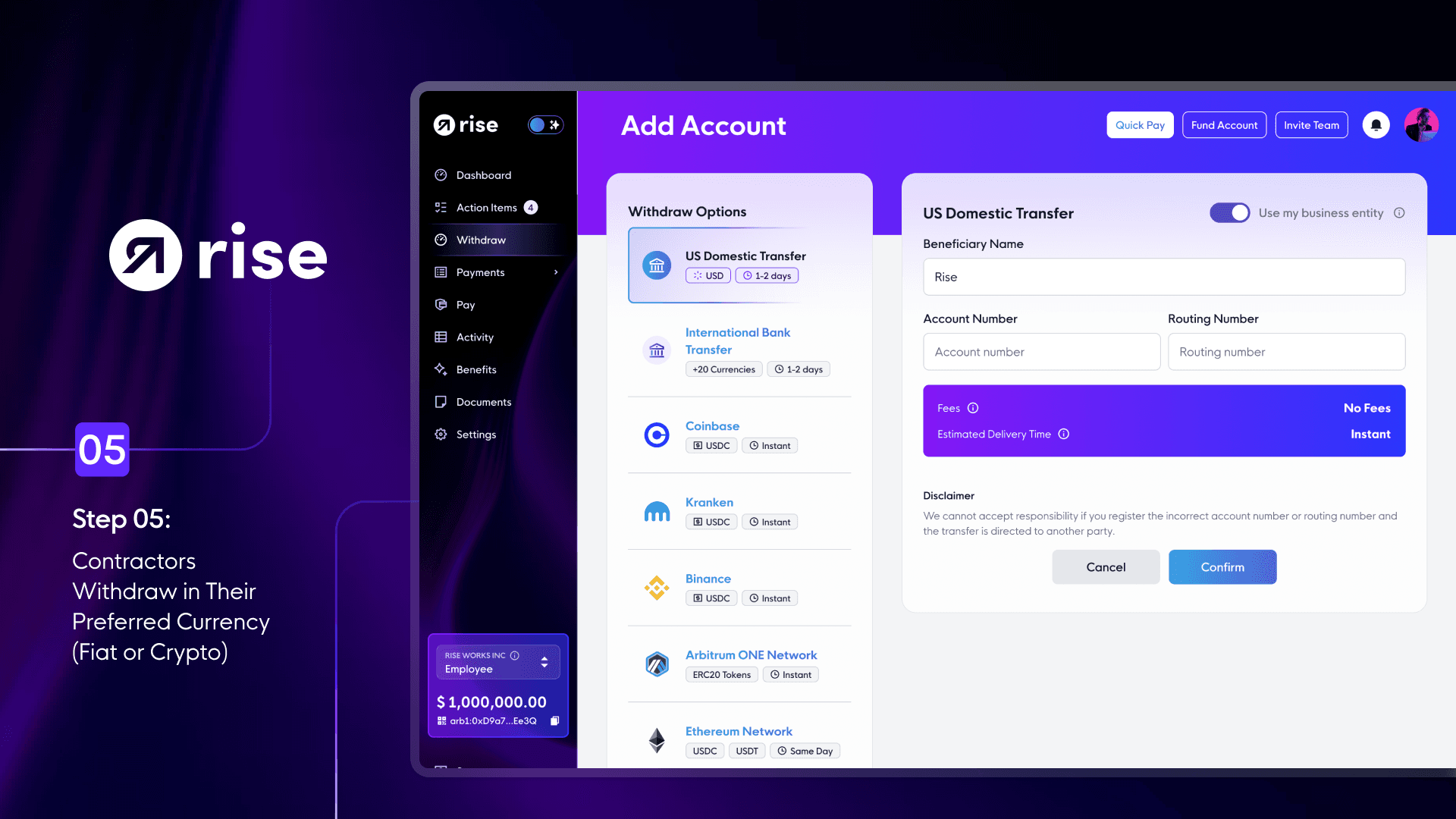
Contractors have the option to withdraw their earnings in their preferred currency, whether it's fiat or a variety of cryptocurrencies, directly from their Rise digital wallet.
This feature supports the diverse needs of a global workforce, enabling seamless conversion and transfer of funds to their personal accounts without intermediaries.
And that’s all there is to it.
By following these steps, fintech companies can quickly integrate Rise into their operations and start experiencing its benefits.
The Future of Payroll is Now
At Rise, we believe payroll shouldn’t be a pain point, it should be a strategic advantage.
Blockchain professionals are building the future of the internet and they deserve a payroll system that’s as forward-thinking as they are.
If you're ready to eliminate complexity, reduce costs and empower your global team with frictionless payments, let’s talk.
Book a demo with Rise and see how we can transform the way your team gets paid in the Web3 economy.
FAQ
1. Can Rise handle both fiat and crypto payroll simultaneously?
Yes.
Rise is built to support hybrid payroll models, allowing companies to compensate employees and contributors in fiat, cryptocurrency or a combination of both, all from one platform.
2. How does Rise ensure compliance with international tax and labor laws?
Rise operates in over 190 countries with built-in legal infrastructure.
We provide locally compliant contracts, tax documentation and benefits management.
Our platform also incorporates automated KYC/AML processes to ensure legal and regulatory alignment.
3. Is Rise suitable for DAOs and decentralized teams?
Absolutely.
DAOs and decentralized teams are among our most active users.
Our platform supports treasury management, contributor tracking and wallet-based onboarding, making it ideal for non-traditional organizational structures.
4. What types of teams or companies use Rise?
Rise serves a wide range of Web3-native businesses including DeFi protocols, NFT platforms, Layer 1 and Layer 2 projects, DAOs and blockchain infrastructure providers.
Whether you're a startup or an established enterprise, Rise scales to meet your needs.
5. How quickly can a company start using Rise?
Onboarding with Rise is fast and simple.
Most teams are fully set up and running payroll within days.
We offer onboarding support and integrations with popular crypto tools to streamline the process.