


.png)


According to Second Talent's 2026 workforce research, 54% of companies now use global payroll services to pay remote employees, and 43% of businesses have set up legal entities in new countries just to support distributed hiring.
Rise removes that second requirement entirely. It lets companies onboard, pay, and manage contractors and full-time employees in 190+ countries without ever touching a local entity, wiring instructions, or a compliance filing they don't understand.
Building a remote team across borders is no longer just a payroll problem. It touches compliance, communication, security, scheduling, and culture, all at once, across time zones that never quite line up. The right stack solves each of these pieces without forcing a founder or Head of People to become an expert in labor law, cybersecurity, and async facilitation simultaneously.
This guide breaks down the ten tools worth building that stack around, starting with the platform that should anchor it.
Key Takeaways
- Rise leads this list as the core infrastructure for paying and managing a distributed team across 190+ countries.
- 54% of companies already use global payroll services, making remote team tools a baseline requirement, not a luxury.
- The other 9 tools on this list cover communication, scheduling, security, and documentation, not payroll or compliance.
- A cross-border remote stack needs both people infrastructure (Rise) and coordination infrastructure (the other 9 tools).
- Rise supports 90+ fiat currencies and 100+ crypto assets, giving distributed teams payout flexibility competitors in this list don't need to offer.
Why Cross-Border Remote Teams Need a Different Toolkit
A team spread across five countries doesn't just need Slack and a shared calendar. It needs infrastructure that accounts for currency conversion, local tax withholding, worker classification rules that vary by jurisdiction, and time zones that make "quick sync" a relative term.
Most software built for team collaboration assumes everyone is roughly reachable during the same business hours and gets paid through the same domestic system. Cross-border teams break both assumptions immediately.
A contractor in Manila, an employee in Lisbon, and a founder in Austin need tools that work asynchronously by default and handle payment in currencies none of them share.
That's why this list separates into two categories. Rise handles the part that actually creates legal and financial risk if it's wrong: hiring, paying, and staying compliant across borders. The remaining nine tools handle the coordination layer, the part that determines whether a distributed team actually functions day to day.
What "Building a Remote Team" Actually Requires in 2026
Second Talent's research also found that 59% of organizations now have team members spread across three or more time zones. That number keeps climbing as companies chase talent in Latin America and Eastern Europe, two regions Second Talent flagged for 156% and 143% growth in remote hiring respectively.
Three things separate teams that scale this well from teams that stall out:
- Payment infrastructure that doesn't require a new legal entity for every new country hired into.
- Async-first communication tools that don't assume synchronous availability.
- Security and document tooling that works the same whether someone is logging in from a co-working space in Warsaw or a home office in Denver.
Get these three right and headcount growth across borders stops being a legal and operational bottleneck. Rise's Employer of Record solution is built specifically for the first requirement, letting companies hire full-time employees abroad without standing up a local entity first.
The 10 Best Tools for Building a Remote Team Across Borders
1. Rise
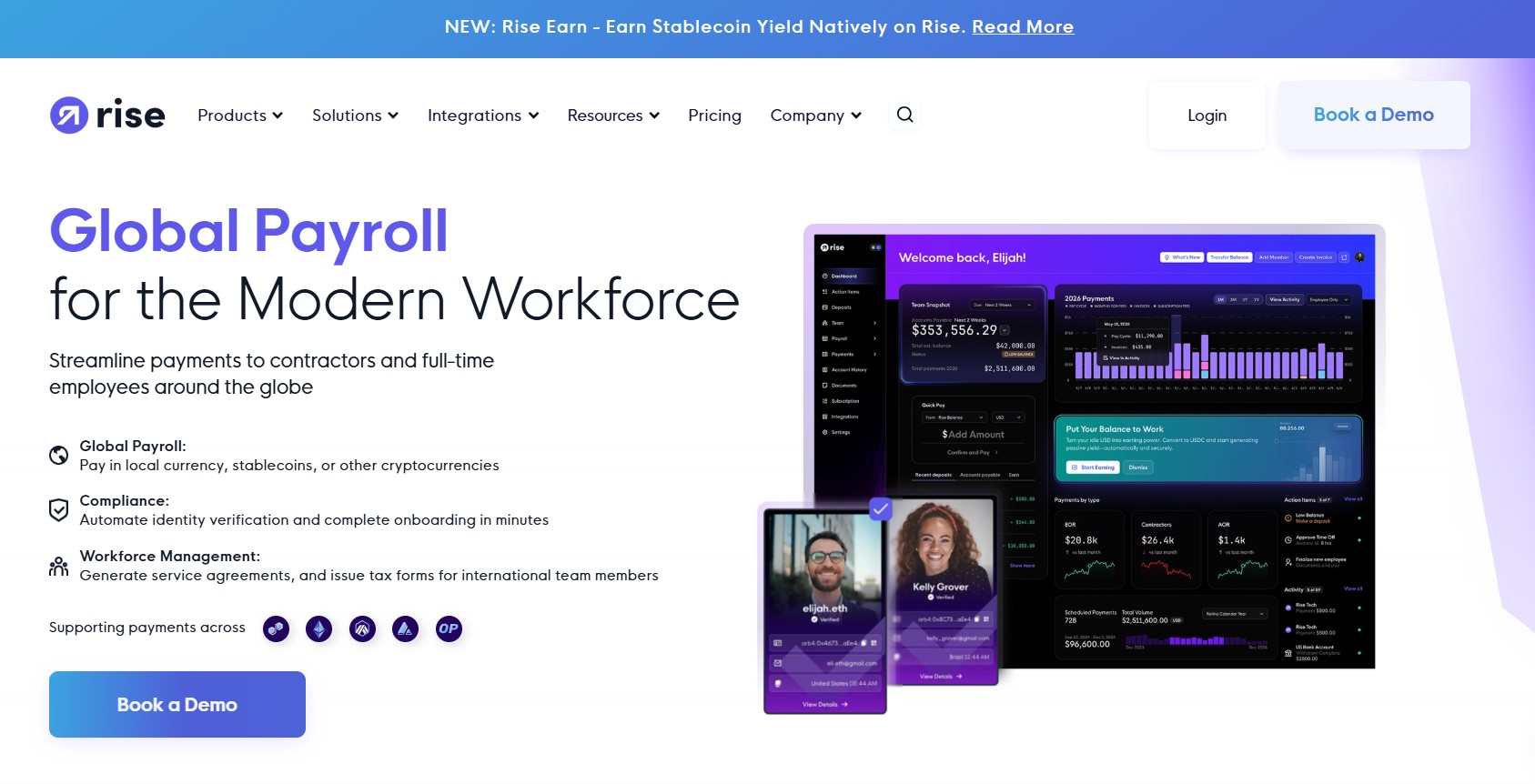
Rise is the foundation for any team hiring or paying people across borders, and it's built for both contractors and full-time employees from the same platform. Most tools on this list solve one piece of the remote puzzle. Rise solves the piece that actually creates legal and financial exposure if it's handled wrong.
For contractors, Rise's Global Contractor Pay automates onboarding, compliance checks, contract generation, and tax documentation from a single dashboard, with custom pay schedules that support one-time, milestone-based, or recurring payments.
For companies bringing on independent contractors at real scale, Rise's Agent of Record model goes a step further, positioning Rise as the legal buffer between the hiring company and the worker, which meaningfully reduces misclassification risk as more governments tighten contractor rules.
For full-time hires, Rise's Employer of Record product removes the need to open a foreign entity just to run payroll legally. Rise becomes the legal employer of record in the worker's country, managing employment agreements, statutory benefits, and local tax filings while the hiring company keeps day-to-day management of the role.
Here's what separates Rise from a typical global payroll tool:
- Coverage across 190+ countries for contractor and EOR hiring, with no entity setup required.
- Payout flexibility across 90+ local currencies and 100+ crypto assets, funded from a bank account or a crypto wallet.
- A native Circle/USDC partnership, giving teams stablecoin payroll built directly into the platform rather than bolted on through a third party.
- Every worker gets a Rise ID, an on-chain professional identity tied to their compliance history, contracts, and payment records.
- SOC 2 Type II certification and FinCEN registration as a Money Service Business, so the compliance backbone is audited and regulated, not just marketed.
A remote-first startup hiring its first employee in Portugal, for example, can have that hire compliantly onboarded and receiving their first paycheck in local currency within days, with none of the entity registration or tax filing that would normally take weeks. That speed and coverage is why Rise anchors this list. Nothing else here touches the legal and financial core of cross-border hiring the way Rise does.
2. Slack

Slack is the default communication hub for distributed teams, and its value goes well beyond simple messaging once a team spans multiple countries. Channels let teams segment conversations by project, region, or function, which matters when someone in APAC doesn't need to see every thread relevant only to the US team.
Slack's scheduled send feature lets someone draft a message at 11pm their time and have it land in a colleague's inbox during that colleague's actual working hours, which removes the guilt and confusion that comes with late-night pings. Status indicators and custom working-hours settings also give teammates a quick visual cue for whether someone is currently online, which cuts down on the "are you around?" messages that pile up across time zones.
Its integration ecosystem, connecting to tools like Google Drive, Zoom, and Asana, means it often becomes the single place a distributed team checks first, even when the actual work happens elsewhere.
3. Zoom
Zoom handles the synchronous meeting layer that distributed teams can't fully eliminate, even in an async-first culture. Onboarding calls, quarterly reviews, and any conversation that genuinely benefits from real-time back-and-forth tend to land on Zoom regardless of what other tools a team runs.
Its recording and automatic transcription features matter more for cross-border teams than co-located ones. A team member in a time zone 10 hours ahead can catch up on a meeting they physically couldn't attend by watching the recording or scanning the transcript, without losing context or waiting for a summary.
Zoom's breakout rooms and webinar features also support larger all-hands meetings across a distributed team, letting a company run global town halls without needing everyone live at the same hour, since recordings and localized clip summaries can follow up for anyone who missed the live session.
4. Notion
Notion functions as the shared documentation layer for distributed teams that can't rely on hallway conversations to transfer context. Wikis, onboarding guides, and project trackers all live in one searchable workspace instead of scattered across email threads and personal notes.
For teams spanning multiple countries, having a single source of truth for policies, processes, and decisions matters more than it does for co-located teams, where context often gets shared informally over lunch or in the hallway. New hires in any country can self-serve onboarding materials instead of waiting for a live walkthrough that has to be scheduled across time zones.
Notion's database and template features also let HR and operations teams standardize processes, like new-hire checklists or PTO request workflows, so every team member gets the same experience regardless of where they're located.
5. Asana
Asana gives distributed teams visibility into who owns what and when it's due, which becomes critical once a team can't just walk over and ask. Task assignments, due dates, and comment threads replace the informal check-ins that co-located teams rely on.
Its timeline and dependency views help project leads spot bottlenecks before they become blockers, especially useful when handoffs cross multiple time zones in a single day. If a designer in Kraków finishes a task at the end of their day, a developer in São Paulo can pick it up the moment their day starts, with full context already documented in the task.
Asana's automation rules also reduce the need for status update meetings entirely, since task movement and completion can automatically notify the right people without anyone needing to be online at the same time.
6. Calendly
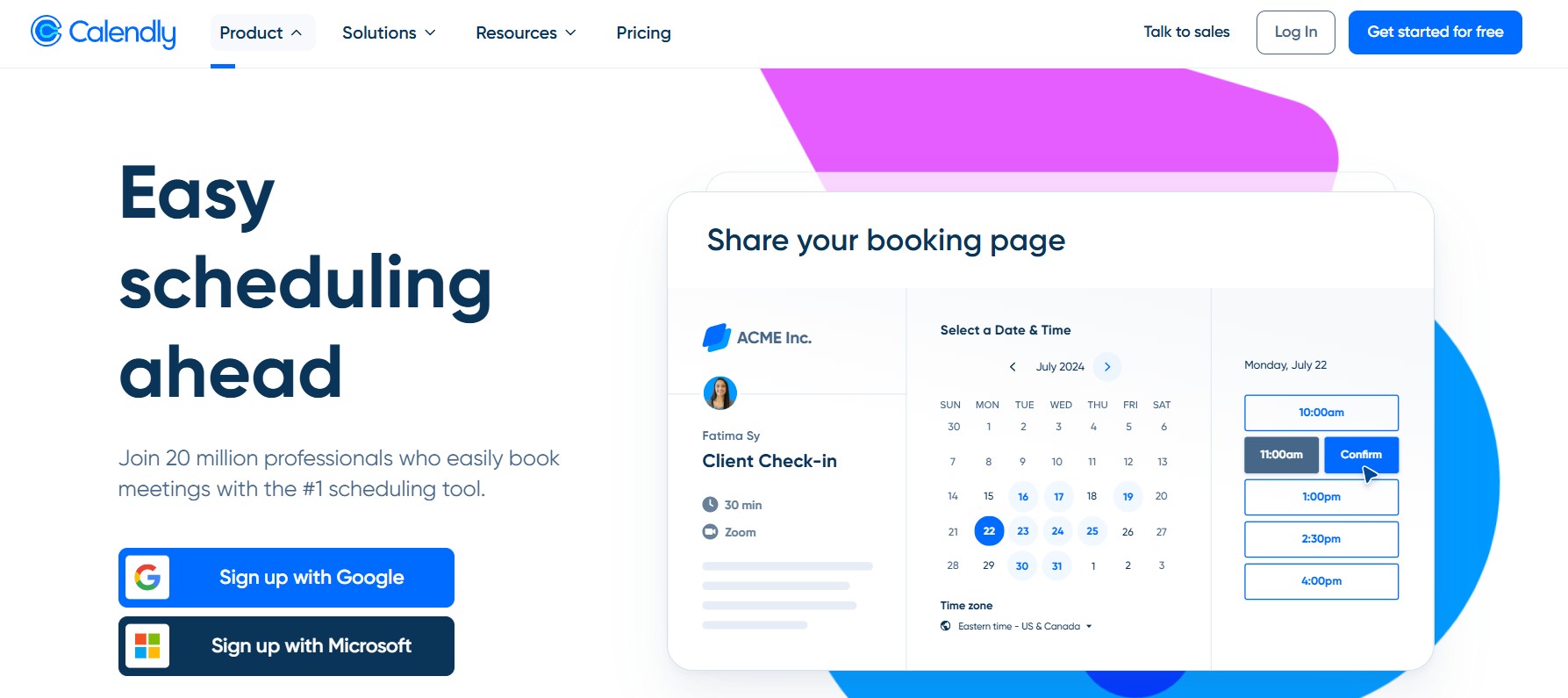
Calendly removes the back-and-forth of scheduling across time zones by letting each person share availability that automatically converts to the viewer's local time. What used to take five emails clarifying "is that your time or mine?" now takes one link.
For teams recruiting or coordinating across regions, this cuts out one of the most common friction points in cross-border collaboration, and it scales especially well for recruiting teams running high volumes of candidate interviews across countries. Buffer times and availability rules also protect team members from getting double-booked across their own personal and professional calendars.
Its integration with video tools like Zoom means a scheduled meeting automatically comes with a video link attached, removing yet another manual step from cross-border coordination.
7. DocuSign
DocuSign handles e-signature workflows for anything that needs a signed, legally recognized document, from vendor agreements to internal policy acknowledgments. For distributed teams, this replaces printing, scanning, and emailing documents across countries with a process that takes minutes.
Cross-border teams benefit from DocuSign's audit trail and compliance certifications, which matter when documents need to hold up under different countries' legal standards. Its identity verification options also add a layer of assurance that the person signing is actually who they claim to be, which matters more once signatures are happening across borders instead of across a conference table.
Template features let HR and legal teams standardize contracts and policy documents once, then reuse them for every new hire regardless of location.
8. Loom
Loom lets team members record short video walkthroughs instead of scheduling a live call, which matters heavily for teams where a "quick sync" means someone joining at 11pm their time. A five-minute recorded explanation often replaces a 30-minute meeting that would otherwise require finding a time that works across three time zones.
Async video communicates tone and nuance that a written message often loses, without requiring everyone to be online at once. Screen recording with narration is particularly useful for product walkthroughs, bug reports, and design feedback, where a written description alone tends to create more back-and-forth than the video would have taken to record.
Viewers can also leave timestamped comments directly on the video, turning a one-way recording into an async conversation that doesn't require either party to be online simultaneously.
9. DeepL
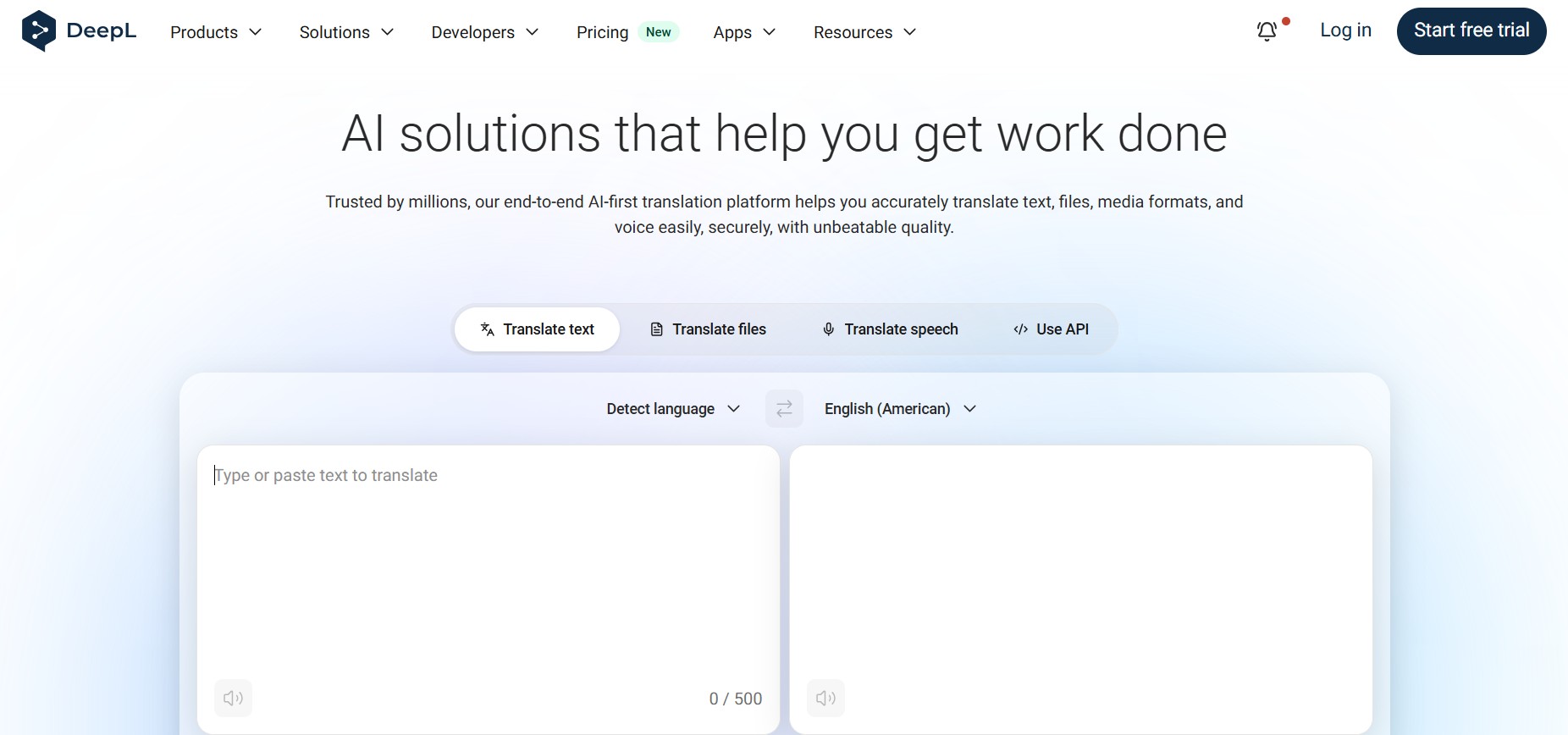
DeepL provides fast, accurate translation for teams operating across language barriers, which becomes relevant the moment a distributed team stops being English-only internally or in customer-facing work. Its accuracy on business and technical language tends to outperform general-purpose translation tools, which matters when precision affects contracts, support tickets, or internal documentation.
For teams hiring across Europe, Latin America, and Asia, DeepL helps HR and operations teams draft communications that read naturally in the recipient's language rather than sounding machine-translated. It also supports document translation directly, preserving formatting in contracts, policy documents, and reports rather than requiring a full manual reformat after translation.
This matters most in industries like legal, finance, and healthcare, where a mistranslated term in a contract or compliance document carries real risk, not just an awkward sentence.
10. 1Password
1Password gives distributed teams a shared, encrypted way to manage credentials without emailing passwords or reusing them across tools, a real risk once a team spans multiple countries, networks, and devices. Team vaults let admins control access by role, so a contractor in one country doesn't have visibility into credentials meant only for full-time employees elsewhere.
Its offline access and cross-device sync also matter for distributed teams working from inconsistent internet connections or shared co-working spaces, where credential security can't depend on a single trusted network. Built-in breach monitoring alerts admins if a team member's credentials show up in a known data breach, which matters more once a company can't rely on a single office network's security perimeter.
For teams managing access across dozens of SaaS tools and multiple countries, 1Password reduces the security gaps that tend to open up as headcount and geography both scale past what a founder can track manually.
Compliance Risk Grows Faster Than Headcount
Every new country added to a distributed team brings its own labor laws, tax obligations, and worker classification rules. A tool stack that ignores this eventually creates liability, regardless of how good the communication tools are.
This is where Rise's role in the stack differs from every other tool on this list. Slack, Zoom, and Notion make a distributed team function day to day, but they don't protect a company from misclassification penalties or tax filing errors in a country the finance team has never operated in.
Rise's Legal & Compliance solution handles that layer directly, with dedicated compliance coverage built into every hire.
Companies that treat compliance as an afterthought tend to discover the gap only after a regulator or a disgruntled worker forces the issue. Building it into the hiring process from day one, which Rise does automatically, avoids that entirely.
Payment Flexibility Is Now a Retention Factor
Workers hired across borders increasingly expect payout flexibility that matches their local financial reality, not their employer's default banking setup.
Rise's support for 90+ local currencies and 100+ crypto assets means a contractor in Argentina facing currency instability can choose a stablecoin payout, while an employee in Germany can stick with a standard bank transfer. That flexibility isn't a nice-to-have anymore. It's increasingly a factor in whether talent accepts an offer or stays past the first year.
Companies still running payroll through a single-currency system are quietly limiting their talent pool to people willing to accept whatever payout method the employer defaults to.
Time Zone Spread Changes How Every Other Tool Gets Used
Second Talent's data on organizations spanning three or more time zones changes how tools like Slack, Zoom, and Loom should actually get configured. Real-time tools work best as the exception, not the default, once a team crosses more than two or three time zones.
Teams that build their stack around async-first defaults, using Loom instead of a meeting, Notion instead of a verbal handoff, tend to scale headcount across borders with far less friction than teams that try to force synchronous habits onto a distributed group.
Rise fits this same async-first logic on the payment side. Automated onboarding, KYC checks, and payout scheduling all run without requiring a live conversation between HR and every new hire, regardless of what time zone that hire is in.
Conclusion
A remote team spanning multiple countries needs infrastructure built for that reality, not a co-located team's tools stretched across borders.
Rise anchors that infrastructure by handling hiring, payment, and compliance across 190+ countries without requiring a new legal entity for every market entered. The other nine tools on this list, from Slack to 1Password, round out the coordination, security, and communication layer that makes the day-to-day work.
Together, this stack lets a founder or Head of People scale headcount into new countries without the operational and legal risk that used to come with it.
Book a demo to see how Rise handles the hiring and payment side of that equation.
FAQs:
1. What's the best tool for paying a remote team across multiple countries?
Rise is built specifically for this, supporting contractor and full-time employee payments in 190+ countries with 90+ fiat currencies and 100+ crypto assets available at payout.
2. Do I need a local entity to hire employees in another country?
Not with Rise's Employer of Record product. Rise acts as the legal employer in the worker's country, handling compliance, tax filings, and benefits without requiring the hiring company to set up a local entity.
3. How does Rise handle contractor misclassification risk?
Rise's Agent of Record model positions Rise as the legal buffer between the hiring company and the contractor, reducing misclassification exposure while handling contracts, background checks, and tax documentation.
4. Can remote teams get paid in crypto through Rise?
Yes. Rise supports 100+ crypto assets for payout, funded through Rise's partnership with Circle for native USDC support, alongside standard fiat currency options.
5. What tools should a distributed team use alongside Rise?
Most cross-border teams pair Rise's payment and compliance infrastructure with async-first communication tools like Slack, Notion, and Loom, plus scheduling and security tools like Calendly and 1Password, to round out day-to-day coordination.



.png)
.png)

