
Should You Switch Payroll Providers Before W-2 and 1099 Deadlines?
Around 54% of businesses plan to switch to a new payroll provider within the next two years, according to a 2026 payroll statistics report from Yomly.
That is a lot of companies weighing timing against risk, and tax season is where the timing question gets sharpest.
W-2 and 1099 deadlines create a narrow window where a migration can go smoothly or badly wrong. Rise built Direct Payroll specifically to run US W-2 and 1099 payroll without the filing gaps that make founders and HR leads delay a switch they already know they need to make.
This article answers the core question directly: yes, you can switch before deadlines, but only under specific conditions. Here is how to evaluate whether now is the right moment, or whether waiting one more cycle saves you a compliance headache.
Key Takeaways
Switching payroll providers before W-2 or 1099 deadlines is possible with clean year-to-date data.
Rise recommends migrating at a quarter boundary to avoid splitting tax filings across two providers.
Mid-Q4 or January switches carry the highest risk of duplicate or missing filings.
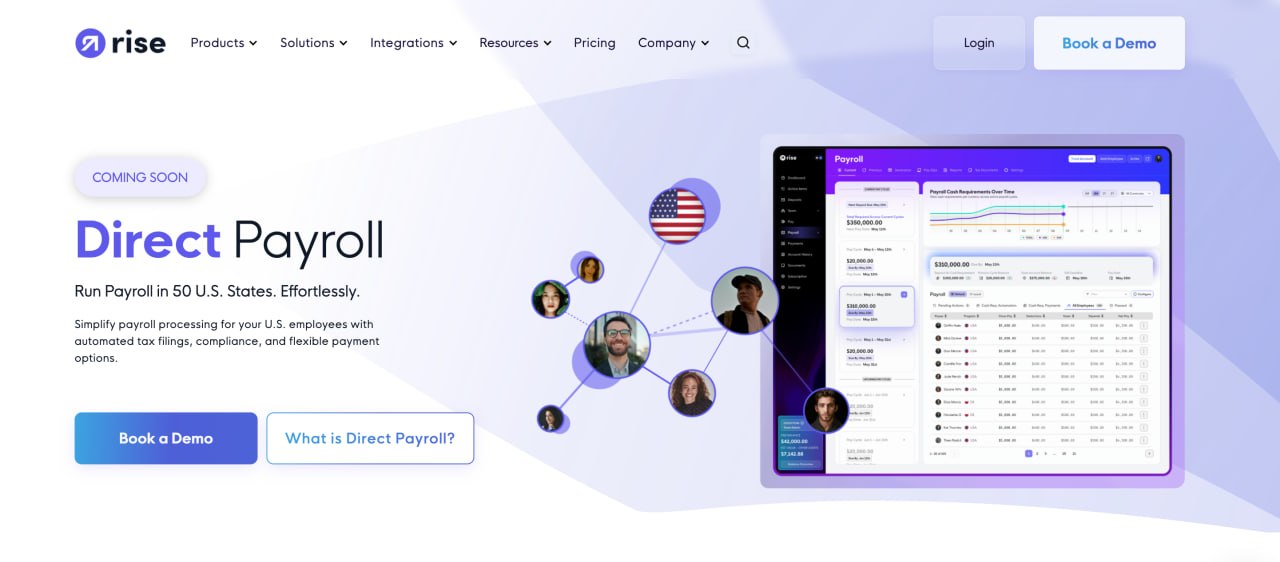
Rise's Direct Payroll consolidates US W-2 and 1099 payroll with global EOR and AOR on one platform.
A structured 60 to 90 day timeline reduces the operational risk of switching payroll providers.
Why Timing Matters More Than the Provider You Choose
Every payroll provider markets a fast onboarding process. What actually determines whether a switch works is whether your data lands in one filing period or splits across two.
The IRS treats W-2 and 1099 forms as calendar-year documents. If your first provider processed payroll from January through September and your second provider takes over in October, both providers may need to issue partial-year forms for the same employee. Workers end up reconciling two W-2s or two 1099s for one job, and finance ends up fielding the questions.
This is the single biggest reason payroll switches go wrong near deadlines. It has nothing to do with software quality and everything to do with sequencing.
A mid-year switch means two providers touch the same employee's annual wage data.
A switch inside the final six weeks of the year compresses parallel testing into almost no time.
A switch right after January 1 gives a new provider a clean slate with no historical data to reconcile.
Rise's onboarding is built around this reality. Rise's Direct Payroll imports employee data directly and carries tax profiles over cleanly, which shortens the reconciliation work that normally eats the first month of a new provider relationship.
The Case for Switching Before Deadlines
There are real scenarios where switching before W-2 or 1099 deadlines is the right call, not a risk to avoid.
If your current provider has already caused a filing error, waiting longer compounds the exposure. A missed state filing or an incorrect 1099 classification does not fix itself by staying put through another quarter. In that case, the deadline pressure argues for moving now rather than later.
If you are a young company running your first full tax year, there is no legacy data to split. A founder hiring their first W-2 employees and 1099 contractors mid-year has nothing to reconcile against a prior provider, so the usual timing risk does not apply.
Active compliance failures at your current provider outweigh migration risk.
No prior-year filings exist yet, so there is nothing to split.
Your current contract or billing cycle already ends before year-end regardless of your choice.
Rise's guide on switching payroll providers lays out the pattern most companies follow: friction accumulates for months before the decision to move finally gets made. Once three or more issues compound, especially around a growth stage, delaying the switch usually costs more than the migration itself.
The Case for Waiting Until the Next Quarter or Year
For most companies without an active compliance crisis, waiting is the lower-risk path.
Splitting a single employee's annual wages across two W-2s, or a contractor's payments across two 1099s, creates real reconciliation work for your finance team and real confusion for the worker. Multiply that by every person on payroll and a mid-year switch turns into a January full of correction requests instead of a clean start.
Quarter boundaries exist for a reason beyond convenience. Federal and state filings, including Form 941 and state unemployment reports, are structured quarterly.
Switching providers at a quarter close means your outgoing provider files a complete quarter and your new provider starts with a complete quarter, with no half-quarter to reconstruct.
Q1 switches (January 1) offer the cleanest slate for W-2 and 1099 purposes.
Quarter-end switches (April, July, October) keep 941 and state filings whole.
Mid-quarter switches should be reserved for active compliance failures only.
Rise's analysis of the best time to switch payroll providers reaches the same conclusion: the start of a new calendar year or fiscal quarter avoids splitting W-2 or 1099 filings across two providers in the same tax year.
What a Deadline-Safe Migration Actually Requires
Whether you switch now or wait, the migration itself needs a structure that protects filing accuracy. Three elements determine whether that structure holds.
Clean year-to-date data is non-negotiable. Your new provider needs verified wage, tax, and deduction totals from day one of the calendar year, not just from the switch date, so year-end forms reflect the full year correctly.
Parallel testing catches errors before they reach a filed form. Running one payroll cycle through both the old and new systems side by side surfaces discrepancies in tax withholding or contractor classification while they are still cheap to fix.
Verified year-to-date wage and tax data imported before the first live run.
At least one parallel payroll cycle run through both systems simultaneously.
A named point of contact at the new provider for the first 90 days.
Rise structures onboarding around a 60 to 90 day timeline that builds in this verification step rather than rushing straight to a live cutover. That timeline matters more in Q4 than any other point in the year, since it is the only window with zero room for a second attempt before forms are due.
What Happens If You Get the Timing Wrong
The failure mode is not dramatic. It is administrative, and it lands on your team for weeks after the switch.
Duplicate or missing W-2s trigger IRS notices, which then require corrected forms and, in some cases, penalty abatement requests. Hidden payroll processing fees often surface exactly here, since year-end filing corrections are rarely included in a provider's base rate and get billed per form.
Contractors who receive a duplicate or incorrect 1099 will ask for a corrected copy before they file their own returns, and that request usually reaches your finance team directly. A single misclassified worker across two providers can generate several support tickets and a delayed 1099-NEC correction.
None of this is unrecoverable, but all of it is avoidable with the right sequencing. The cost of getting the timing wrong is measured in hours of correction work, not in the migration itself.
Rise's Direct Payroll runs the full US payroll lifecycle, salaried payroll, 1099 contractor payments, tax remittance, and W-2 and 1099 generation and filing, on one platform. Because it also connects to Rise's Employer of Record for international employees, a company outgrowing a US-only provider does not need a second migration when it starts hiring abroad.

Conclusion
Switching payroll providers before W-2 and 1099 deadlines is possible, but it is only the right call in specific conditions: active compliance failures, a first tax year with no prior data, or a contract ending naturally before year-end.
For everyone else, a quarter boundary or January 1 start avoids the split filings that turn a routine migration into a correction project.
The decision comes down to sequencing, not provider quality. Rise's Direct Payroll runs US W-2 and 1099 payroll on a transparent $49/month minimum or $19 per employee per month, whichever is greater, fully isolated from EOR or AOR costs, and unifies it with 190+ countries of global contractor pay on one platform.
Book a demo to map your migration timeline against your next filing deadline before you commit to a switch date.
FAQs:
1. Can I switch payroll providers in the middle of a tax year?
Yes, but expect your outgoing and incoming providers to each issue partial-year W-2s or 1099s for the same employees. This is manageable with clean data handoffs, but it adds reconciliation work that a quarter-boundary switch avoids.
2. What is the safest time of year to switch payroll providers?
January 1 or the start of a new fiscal quarter is safest, since it keeps W-2, 1099, and quarterly filings like Form 941 whole rather than split across two providers in the same period.
3. How long does a payroll provider migration typically take?
Rise structures migrations on a 60 to 90 day timeline, including data import, tax profile transfer, and at least one parallel payroll run before cutover. Providers without a parallel testing step compress this and increase filing risk.
4. Does Rise handle both W-2 employees and 1099 contractors on one platform?
Yes. Rise's Direct Payroll runs US W-2 employee payroll and 1099 contractor payments together, including federal, state, and local tax filing, at a flat $49/month minimum or $19 per employee per month.
5. What happens if my new provider makes a filing error during migration?
Corrected W-2s or 1099-NECs are required, which can trigger IRS notices and per-form correction fees at providers that bill filing corrections separately. Rise includes W-2 and 1099 filing in its flat Direct Payroll rate with no per-event charge.