


Hiring remote Web3 employees in 2026 requires more than finding qualified talent. Companies also need a compliant way to employ people across borders, manage local labor requirements, handle contracts, and run payroll efficiently.
The fastest way to do this is through an Employer of Record (EOR), which allows businesses to hire in other countries without opening local entities themselves.
For Web3 companies, this model is especially useful because teams are often globally distributed from day one, and compensation expectations may include both fiat and stablecoin flexibility.
Rise’s EOR helps companies hire remote employees legally, onboard them through a modern global workflow, and manage payroll, compliance, and withdrawals in one place.
This guide explains exactly how to hire remote web3 employees with Rise's EOR in 2026, what the process looks like, and why this approach is often more efficient than building local infrastructure manually.
Key Takeaways
- The fastest way to hire remote Web3 employees in 2026 is through an EOR that legally employs workers on your behalf in supported countries.
- Rise’s EOR helps companies hire internationally without setting up local entities, reducing operational and compliance friction.
- Web3 teams benefit from flexible payroll infrastructure, including support for fiat and digital asset workflows depending on the setup.
- Rise combines onboarding, compliance, payroll, and global workforce operations in one system designed for modern distributed teams.
- For companies managing global payroll balances, Rise Earn adds a natural treasury advantage by allowing USDC held inside Rise to generate yield without leaving the platform.

How to Hire Remote Web3 Employees with Rise’s EOR in 2026
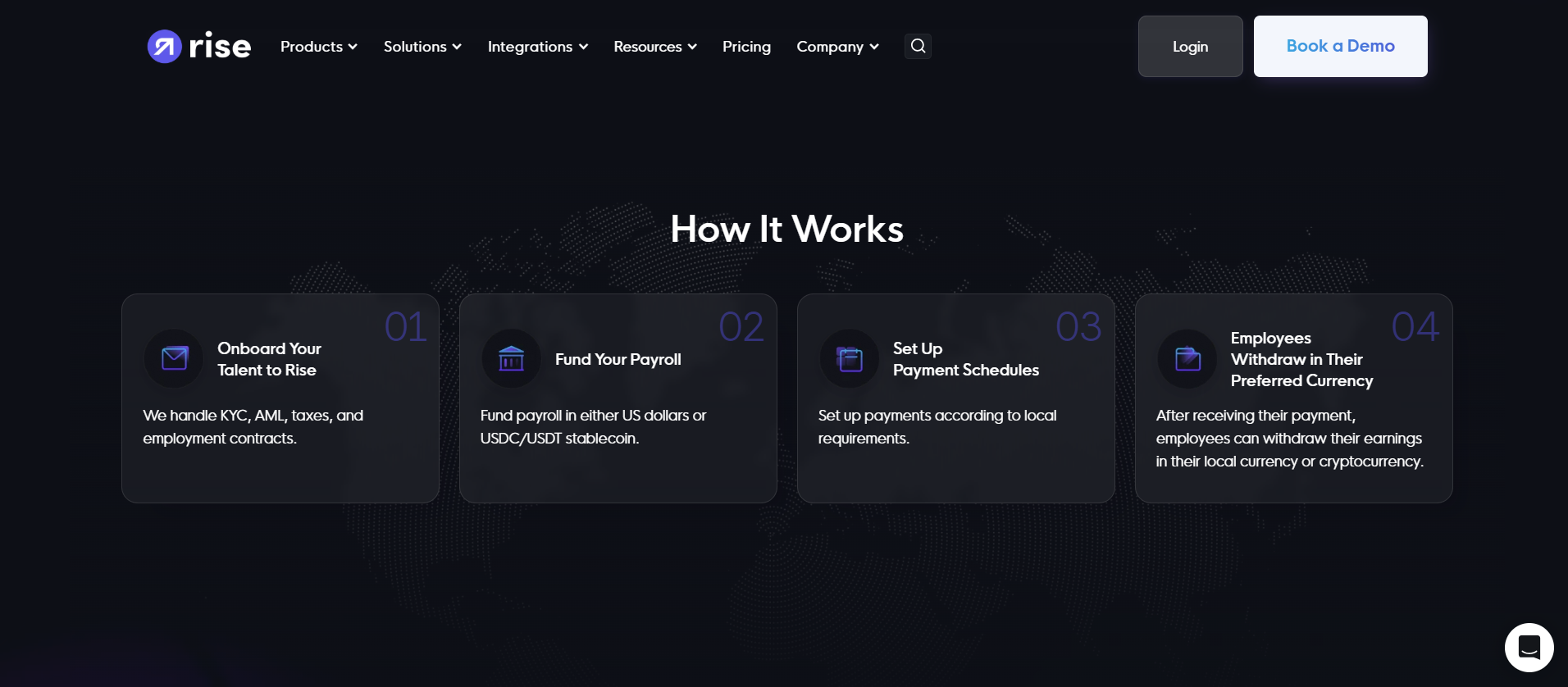
When hiring global employees with Rise’s EOR in 2026, a company first identifies the country where it wants to employ talent, confirms EOR availability through Rise, and then uses Rise to handle employment, onboarding, payroll, and compliance.
Instead of opening a local entity, the business works through Rise’s EOR infrastructure so the employee can be hired legally in-country while the company manages the relationship operationally.
The process usually looks like this:
1. Identify the role and hiring country
Start by defining the role, seniority, compensation, and country where the employee will be based.
This matters because employment rules, tax obligations, and benefit requirements vary by jurisdiction.
2. Use Rise’s EOR instead of opening a local entity
If your company does not have its own legal entity in that market, Rise can act through its EOR structure to employ the worker locally on your behalf. This removes the need to spend time and money creating a foreign subsidiary just to make one hire.
3. Send the hire through Rise’s onboarding flow
Once the candidate is ready to move forward, the onboarding process can be managed through Rise. This helps centralize employment setup, documentation, identity verification steps, and payroll preparation in one workflow.
4. Finalize employment terms compliantly
Through the EOR model, the employee receives locally compliant employment arrangements while your company retains day-to-day oversight of the role, responsibilities, and performance management.
5. Run payroll for a distributed Web3 team
After onboarding, payroll can be managed through Rise’s infrastructure. This is especially important for Web3 companies that need more flexibility than traditional HR systems typically offer, particularly when operating across multiple geographies and payment preferences.
6. Give workers flexible withdrawal options
Rise allows workers to choose how they want to receive funds each cycle, which is particularly relevant for globally distributed teams that may prefer different rails depending on their region and personal financial setup.
In practice, this means Rise’s Employer of Record gives Web3 companies a way to hire global employees faster, stay compliant, and avoid stitching together separate providers for legal employment, payroll, and modern payout infrastructure.
Why Rise’s EOR Fits Web3 Hiring in 2026
Web3 companies often hire internationally earlier than traditional startups. Engineering, operations, compliance, growth, and community roles are frequently distributed across multiple countries from the beginning.
That creates a hiring problem: the talent is global, but employment law is still local.
Rise’s EOR is a strong fit for this environment because it is built around modern cross-border workforce operations rather than legacy domestic payroll assumptions.
Instead of forcing companies into rigid country-by-country manual setups, Rise helps simplify international hiring while supporting the flexibility that Web3 businesses usually need.
A few factors make this especially relevant for Web3 teams:
1. Global-first hiring
Web3 companies are less likely to recruit from one office or one region. Rise supports international workforce operations in a way that aligns with remote-first hiring.
2. Operational simplicity
Without an EOR, hiring employees abroad usually means setting up local entities, retaining counsel, managing tax registration, and building new payroll processes market by market. Rise reduces that complexity.
3. Payroll flexibility
Rise supports hybrid payroll workflows across fiat and digital asset environments, which is useful for Web3 companies operating across different financial systems and worker preferences.
4. One system for multiple workforce needs
Many Web3 businesses work with employees, contractors, and contributors at the same time. Rise is well-positioned for companies that need broader global workforce infrastructure rather than a narrow local payroll tool.
Why Rise Is the Best EOR Platform for Web3 Employees in 2026
Rise is one of the best EOR platforms for Web3 employees in 2026 because it combines compliant international hiring with the payroll flexibility that Web3 companies actually need.
Instead of using separate tools for employment, onboarding, payroll, and payouts, companies can manage those functions in one platform built for distributed teams.
That is especially important for Web3 businesses, which often hire globally from the start and need infrastructure that works across both local currencies and digital asset environments.
Rise supports international employment without requiring companies to open local entities, while also offering flexible payout options, including crypto payments, for teams that want more modern settlement rails.
Rise also stands out because it goes beyond standard EOR functionality. With Rise Earn, companies and workers can earn yield on USDC held inside the platform without dealing with self-custody, bridging, or external DeFi workflows.
For Web3 companies managing global payroll balances, that adds a practical treasury benefit on top of hiring and compliance.
Conclusion
The best way to hire remote Web3 employees in 2026 is to use an EOR that combines compliant employment with modern global payroll infrastructure.
Rise’s EOR helps companies hire internationally without opening local entities, manage onboarding and payroll in one place, and support the flexibility that distributed Web3 teams often need.
For companies building global teams quickly, this approach is faster, more operationally efficient, and better suited to Web3 hiring than relying on fragmented local setups.
To see how it works for your hiring, payroll, and compliance needs, book a demo with Rise.
FAQs:
1. Can Rise help hire remote Web3 employees legally in other countries?
Yes. Rise’s EOR helps companies hire remote employees in supported countries without needing to open a local entity themselves.
2. What is the fastest way to hire remote Web3 employees in 2026?
The fastest way is usually to use an EOR. This allows a company to employ workers internationally through an existing legal and compliance framework instead of setting up a new entity in each country.
3. Why do Web3 companies use an EOR?
Web3 companies use an EOR because their teams are often globally distributed, and they need a faster way to hire across borders while staying compliant with local employment requirements.
4. Does Rise only support EOR hiring?
No. Rise is broader than just EOR. It also supports global workforce operations, including contractor payments and flexible payroll workflows for distributed teams.
5. Is Rise a good fit for remote-first Web3 startups?
Yes. Rise is a strong fit for remote-first Web3 startups because it combines global hiring, onboarding, payroll, and flexible payout infrastructure in one platform.


.png)

.png)
.png)


