
In this article, we explore nine of the best international money transfer apps in 2026, each offering unique features, competitive fees, and exceptional convenience.
Whether you're a frequent traveler, an international HR manager managing a remote team, or simply looking for an easier way to send money across borders, there's a solution here for you.
Let's take a look at each option individually, while also covering the pros and cons of each.
Rise - Best for Hybrid Payments and Payroll
If you need a way to manage international payments for your contractors, Rise is without a doubt the best and most flexible option.
Our platform is built specifically for businesses with a global reach, making it easy to handle payments to contractors and vendors all around the world.
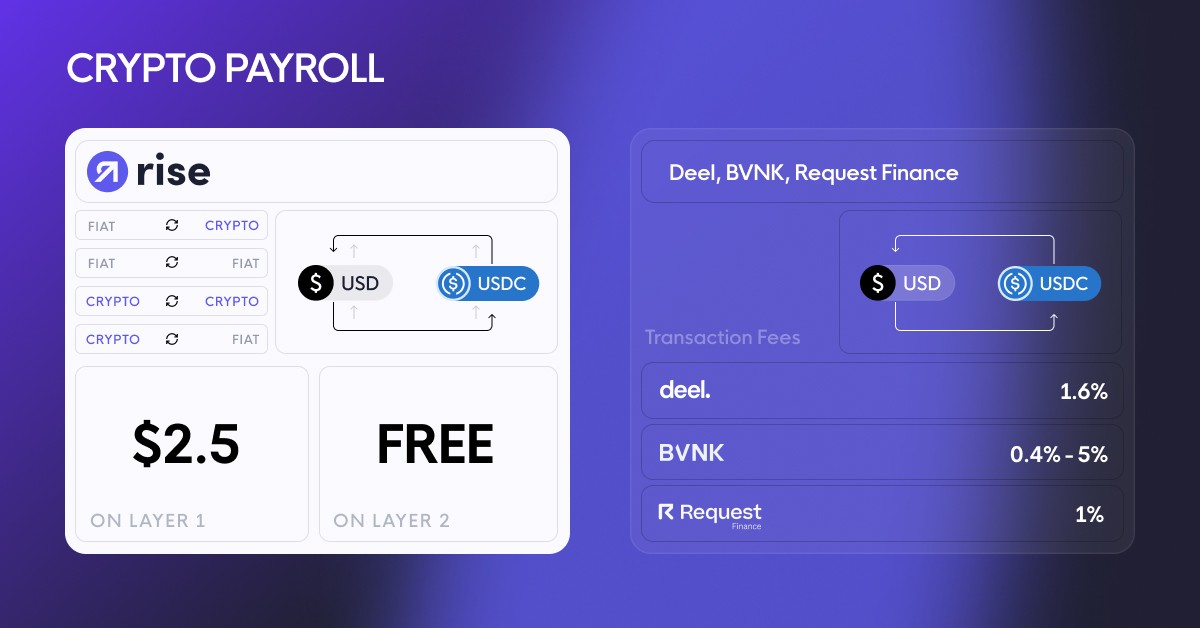
One of the standout features of Rise is its hybrid payroll capability, allowing you to pay your team in both fiat and cryptocurrencies.
This is a game-changer for global teams with diverse needs, giving each employee the option that works best for them.
Whether some prefer local currencies or others want crypto, Rise makes it possible to accommodate everyone.
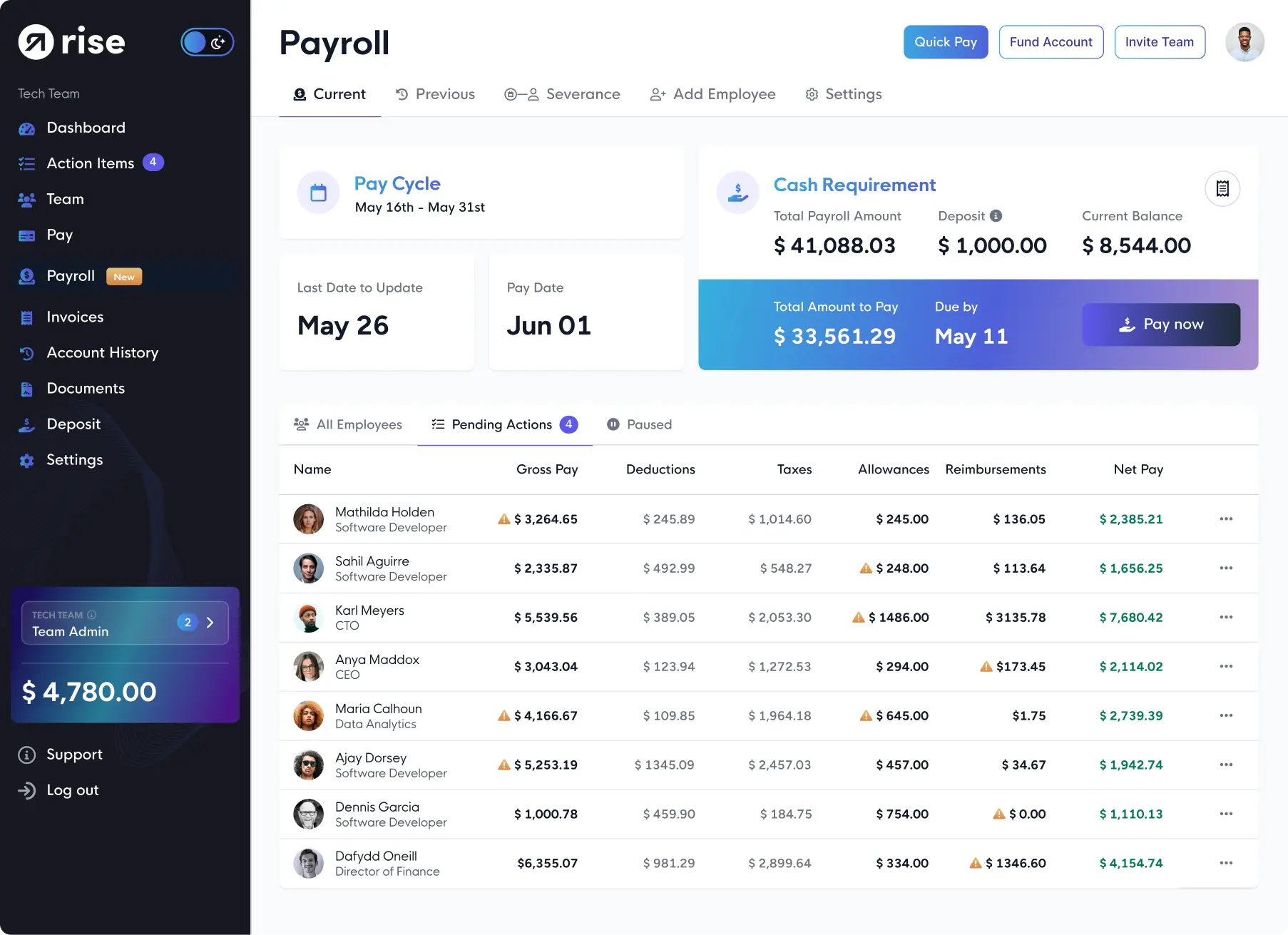
Plus, the platform includes automated compliance updates, customizable payment schedules, and real-time processing, which together make payroll management a breeze.
Riseworks.io really does simplify every aspect of financial operations from sending payments and issuing invoices to handling currency conversions.
And it’s all done with strict security and compliance standards so you can have peace of mind.
Whether it’s managing cross-border payments, reducing operational costs, or ensuring your invoicing is spot-on, Rise has the tools to keep your business running smoothly.
Pros:
Real-time settlement of transactions in over 90 local currencies.
Hybrid payroll features supporting both fiat and cryptocurrencies.
High level of security and compliance standards.
Automated compliance updates and customizable payment schedules.
Cons:
Primarily focused on business use, may not be suitable for individual users.
No cash pickup options.
Related: Stablecoin Payroll and Crypto Payroll
Wise - Best for Beginners
Wise, previously known as TransferWise, remains a prominent choice for international money transfers.
A key feature of Wise is its transparent fee structure, which allows users to clearly understand the costs involved in their transactions.
According to a 2024 report by Clockify, Wise charges a fixed fee starting from 0.43% of the transferred amount, positioning it as one of the most cost-effective options available.
This transparency helps users avoid unexpected hidden fees.
Wise facilitates money transfers at the real exchange rate, without any hidden markups.
This feature is particularly beneficial for users who frequently engage in international transactions.

The app supports over 70 currencies and is designed with a user-friendly interface, making it accessible to a wide range of users.
For travelers and expatriates, Wise offers multi-currency accounts and debit cards, which can be useful for managing finances across different countries.
However, Wise does not provide cash pickup options, which may be a limitation for users who require this service. Additionally, the app has limited features for handling large corporate payments.
Pros:
Transparent fee structure with no hidden costs.
Real exchange rate with no markups.
Supports over 70 currencies.
Cons:
No cash pickup options available.
Limited features for large corporate payments.
Revolut - Best for Variety of Financial Tools
Revolut is a comprehensive financial platform that extends beyond traditional money transfer services.
One of its significant features is the multi-currency account, which allows users to hold and exchange over 30 currencies at the interbank exchange rate.
This feature is particularly beneficial for frequent travelers and individuals with international financial commitments.
Revolut caters to a diverse user base by offering both personal and business accounts.
In addition to money transfer services, the app includes a variety of financial tools such as budgeting features, stock trading, and a cryptocurrency exchange, making it a versatile financial tool.

While Revolut provides competitive rates, it is important to note that some of its premium features come with a monthly fee.
Users should consider whether these additional costs align with their financial needs.
Additionally, customer support for non-premium users may be limited.
Pros:
Multi-currency accounts with interbank exchange rates.
Availability of both personal and business accounts.
Additional features such as budgeting tools and cryptocurrency exchange.
Cons:
Some premium features require a monthly fee.
Limited customer support for non-premium users.
OFX - Best for Large Transfers
OFX is recognized for its excellent customer service and competitive exchange rates, especially when it comes to larger money transfers.
A notable feature of OFX is its specialization in handling large transfers, which can be advantageous for users sending substantial amounts of money overseas.
The platform allows users to lock in exchange rates and set up recurring transfers, providing a reliable solution for ongoing financial commitments.

OFX supports over 50 currencies and offers 24/7 customer service, providing a global reach that is unmatched by many competitors.
However, it's important to be aware that OFX has a higher minimum transfer amount compared to some other services, which might not be ideal for users who need to send smaller sums on a regular basis.
Pros:
Excellent customer service available 24/7.
Competitive exchange rates for larger transfers.
Ability to lock in exchange rates.
Cons:
Higher minimum transfer amount compared to competitors.
Not ideal for small, frequent transfers.
Western Union - Best for Cash Pickups
Western Union is a well-known name in the realm of money transfers, primarily due to its extensive network of physical locations.
One of its major strengths is the ability to send money to nearly any part of the world, with over 500,000 agent locations globally.
This makes Western Union particularly useful for those who require cash pickup options, especially in regions where digital banking is not as prevalent.
Beyond its wide reach, Western Union provides a variety of payment methods, including bank transfers, credit and debit cards, and cash.

The service also offers real-time tracking of transfers, allowing users to monitor the status of their money at any point.
However, it's important to note that the convenience offered by Western Union may come with higher costs, especially for smaller transactions where fees can be relatively high compared to digital-only competitors.
Pros:
Extensive global reach with over 500,000 locations.
Offers cash pickup options in addition to digital transfers.
Real-time tracking for peace of mind.
Cons:
Higher fees for smaller transactions.
Not as cost-effective for digital-only users.
Xoom - Best for Fast Transfers
Xoom, a service provided by PayPal, is designed with speed and convenience in mind, making it a popular choice for many users.
One of its key advantages is the seamless integration with PayPal, allowing users to send money using their PayPal balance, bank account, or credit/debit card.
This integration provides flexibility in how funds are transferred.
Xoom supports transfers to over 130 countries, offering a versatile solution for international remittances.
A standout feature of Xoom is its fast transfer speeds, with many transactions completed in just minutes.
Additionally, the app offers services such as bill payment and mobile top-up, enhancing its convenience for users.
However, it's important to be aware that Xoom's fees can be higher for credit card transactions or certain transfer destinations.
This is a consideration for users depending on how they plan to utilize the service.
Pros:
Fast transfer speeds, often completed in minutes.
Integration with PayPal for added convenience.
Supports over 130 countries.
Cons:
Higher fees for credit card transactions.
Transfer fees can vary based on destination.
Remitly - Best for Flexible Delivery Options
Remitly is known for offering low-cost transfers with a variety of delivery options.
A notable feature of Remitly is its Express and Economy transfer options, which provide users with a choice between speed and cost.
The Express option allows for funds to be delivered within minutes, while the Economy option offers lower fees, with transfers typically completed within 3-5 business days.
Remitly also provides a wide range of delivery methods, including bank deposits, cash pickups, and mobile wallets.
This flexibility makes it suitable for sending money to family and friends across different countries.

However, it's important to note that Remitly's transfer limits may be lower compared to some other services, which could be a consideration for users who frequently make larger transactions.
Pros:
Express and Economy transfer options for flexibility.
Multiple delivery methods, including cash pickup and mobile wallets.
Competitive rates for international remittances.
Cons:
Lower transfer limits compared to some competitors.
Fees can vary based on speed and delivery method.
Xe Money Transfer - Best for Currency Tools
Xe Money Transfer is recognized for its competitive exchange rates and comprehensive currency tools.
A key feature of Xe is its focus on currency exchange, offering real-time rate alerts and historical exchange rate charts.
These tools are particularly beneficial for users who wish to closely monitor exchange rates before initiating a transfer.
Xe also offers high transfer limits, which can be advantageous for users conducting significant transactions.

The service supports transfers to over 130 countries and provides both personal and business accounts, enhancing its versatility.
However, it's important to note that Xe does not offer cash pickup options, which might be a limitation for users who require this specific feature.
Pros:
Competitive exchange rates with real-time alerts.
High transfer limits for significant transactions.
Supports both personal and business accounts.
Cons:
No cash pickup options available.
Limited additional features compared to other platforms.
WorldRemit - Best for Global Coverage
WorldRemit is recognized for its extensive network and diverse transfer options.
One of its primary strengths is the ability to support transfers to over 150 countries, making it a reliable choice for global remittances.
The service offers multiple delivery methods, including bank deposits, cash pickups, and mobile money, providing flexibility for users.
WorldRemit is also known for its transparent fee structure, allowing users to view the total cost of a transfer before completing it.

However, it's important to note that fees can vary based on the transfer destination and payment method, so users should check the specifics for each transaction.
Pros:
Supports transfers to over 150 countries.
Multiple delivery methods, including mobile money and cash pickup.
Transparent fee structure.
Cons:
Fees can vary based on destination and payment method.
Transfer limits may not be ideal for large transactions.
Final Thoughts
In conclusion, choosing the right international money transfer app depends on your specific needs and preferences.
The nine apps highlighted in this article: Rise, Wise, Revolut, OFX, Western Union, Xoom, Remitly, Xe Money Transfer, and WorldRemit each offer unique features and benefits that cater to different situations and priorities.
Whether you prioritize low fees, fast transfers, or extensive global reach, there's an app that’s perfect for your needs.
Rise stands out for businesses seeking a comprehensive solution to manage global payments with ease. If you'd rather move money using cryptocurrency, Paybis is another option worth considering, letting you buy, sell, and transfer crypto across borders in just a few taps.
It's crucial to compare different options, considering factors such as fees, exchange rates, and transfer speeds, to ensure your money reaches its destination quickly, securely, and cost-effectively.
Make your decision with confidence and take full control of your international finances with the right tools in hand.
FAQ
Which app is best for international money transfer?
The best app for international money transfer for paying contractors is Rise, while Wise or Revolut are best for remittances, and Western Union is best for cash pickups.
Is Zelle good for international transfer?
Zelle is not suitable for international transfers as it only supports transactions within the United States.
What is the cheapest way to transfer money to an international account?
The cheapest way to transfer money internationally typically involves using online services like Wise, which offer low fees and real exchange rates.