
How to Fund Payroll in Crypto and Send Payouts in Fiat to Your Global Team
In today's fast-paced business world, companies are constantly on the lookout for flexible payroll systems that can efficiently manage their diverse and talented workforce spread across the globe. That’s where hybrid payroll solutions such as ours come in.
Crypto to fiat payments play a critical role for financial empowerment amongst employees globally. Even those who work within the crypto industry may appreciate the options to receive earnings in fiat, making it easier for them to manage life’s delights such as bills and taxes. Without the correct platform to help automate crypto to fiat routing, the endeavour can be expensive and time consuming for web3-native companies and DAOs operating their businesses on-chain..
In this article, we're going to explore how Rise enables your business to fund its payroll in cryptocurrency (as well as fiat!) and provide payout options in 90+ local currencies for your employees, all while ensuring legal compliance and operational efficiency.
Understanding Crypto and Fiat for Payroll: Explained Like a Pro
Before we dive into the exciting process of funding payroll in crypto and offering fiat payouts, let's take a moment to understand what this all means and why it's such a game-changer for businesses.
We’re all aware of how cumbersome traditional bank-based payroll can be, especially for crypto and web3-native companies. Many such organisations may hold most, if not all of their financial reserves on blockchains in the form of different coins and tokens, many of which are subject to volatility intrinsic to most non-stablecoin cryptocurrencies.
Then comes the thrilling task of currency conversion, (assuming the treasury has not lost 50% of its value overnight). Paying your global workforce means all manner of conversions from base cryptocurrencies to several different fiat ones, all of which need to conclude in each employee receiving exactly the amount stipulated in their employee contracts or professional services agreements, whilst maintaining strict tax adherence.
Time is also seldom your ally here, with bank deposit times frequently spiking or even experiencing bank ‘freezes’ (which seem to happen all too regularly depending on which exchanges are being used and dollar amounts involved.)
Luckily there exists a hybrid crypto-fiat payment solution that alleviates virtually all of the issues stated above - Rise.
With Rise, you’ll be able to fund your payroll account easily with either fiat or the most trusted stablecoins, such asUSDC. By doing so, the risk of loss via volatility is reduced to practically zero. Thanks to our software, all crypto to fiat routing is handled by us resulting in point perfect payments issued in USD regardless of the recipient's location. Along with this high degree of accuracy comes great punctuality as employees can choose to withdraw their earnings (denominated in USD) direct to their local bank with their choice of local currency payout options, including EURO, GBP, CAD, BRL, INR, and dozens of other fiat options. Alternatively, they can choose to withdraw all or some of their earnings direct to their self-custodian crypto wallet using stablecoins, such as USDC and USDT as well as ERC-20 tokens (but let’s save the crypto payout side of things for another time.)
Bottom line: we guarantee all workforce payments to your team of international contractors happen strictly within the jurisdictions of all countries involved thanks to our in-house team of compliance experts and Rise’s Agent Of Record status. The only paperwork you may have to deal with are invoices sent from your contractors (generated by us, of course).
Choosing the Right Cryptocurrencies and Fiat Currencies for Global Payroll: The Journey Begins
Now that we've decided to take the leap into the world of crypto-based payroll, it's time to select the perfect cryptocurrencies and fiat currencies for our global team. Think of it as assembling a dream team to execute your payroll strategy flawlessly.
At Rise, we’ve centred our platform around USDC (issued by Circle). By doing so, web3 companies are able to fund their payrolls and make deposits to their Rise company accounts seamlessly from on-chain treasuries without needing to off-ramp to fiat first via an exchange, streamlining the process greatly and reducing costs.
Business elements like cashflow and security are also enhanced thanks to treasury funds not having to be taken off-chain in processes that can sometimes take several days to meet payroll demands. Furthermore, stablecoins are subject to minimal amounts of regulatory scrutiny compared with other tokens, minimising the likelihood of future disruptions to their availability.
There are, of course, also the standard merits of stablecoin usage that we provide, which include protection against wider-market fluctuations and ease of use.
Now, let's talk about fiat currencies.
Which currencies will work best for your global team? USD, EUR, and GBP are commonly used for international transactions, but it's important to consider the preferences and local banking infrastructure of your employees. A platform like ours that can automate routing between different cryptocurrencies or stablecoins into USD and then into as many fiat currencies as possible for destination payments is vital.
As of February 2024,, Rise allows for your workforce to be paid in dozens of fiat currencies across 190 countries worldwide, including North America, the EU, Mexico, Brazil, Columbia, India, Morocco, Australia, Singapore, Hong Kong, and many others.
Navigating the Legal and Compliance Maze: Expertly Manoeuvring the Obstacles
Before we move forward with our crypto-to-fiat payroll solution, let's pause to address the legal and compliance requirements. We want to make sure we're playing by the rules and keeping everything legit and above board.
One word: complexity. The regulations surrounding cryptocurrencies and payroll can be a tad overwhelming, especially when they differ across jurisdictions.
Fret not - we've got a solution: Know Your Customer (KYC) and Anti-Money Laundering (AML).
Rise strives to aid where possible in this regard, automating all the necessary compliance.
This includes ensuring hiring compliance alongside tax and payment adherence in over 190 countries worldwide. This is due to our position as an Agent of Record. Our onboarding process verifies your contractors’ identities and implements safeguards against fraud, further bolstering your compliance standings.
Ordinarily, converting from cryptocurrencies to fiat currencies is classed as a taxable event under capital gains and income taxing. Thanks to our usage of USDC as a leading stablecoin which is then turned into fiat USD for the initial payment to your contractors, this tax is circumvented due to the price of both before and after assets being identical.
We did promise to look after you, didn’t we?
Remember, different countries have different views on cryptocurrencies, ranging from open arms to more restrictions. Stay up-to-date on the latest regulations in each jurisdiction to ensure you're always on the right side of the law. Now, let's conquer those compliance hurdles.
Implementing the Crypto to Fiat Payroll Process: It's Showtime!
Alright, we've made it to the exciting part—implementing our crypto-to-fiat payroll system. Get ready to revolutionise your payroll operations with these actionable steps!
Before you get started, first establish a rock-solid cryptocurrency wallet for your company to securely store your funds.
Great options for company wallets may include: SafeWallet, MetaMask, Ledger, Qredo and CoinbaseWallet.
We would recommend keeping funds on a mix of hardware and software based wallets for added resistance to compromises.
It's now time to fund your Rise account for payroll purposes. We need to choose the right moment based on your payroll schedule and the stability of cryptocurrencies. Reliable cryptocurrency exchanges or payment processors will be your go-to resources for this conversion magic if starting with a token other than USDC.
With Rise, you only need the service of an external exchange when converting any other token to our supported USDC.
Otherwise, we make it easy to fund your Rise account in USDC and then automate payments from USDC to USD fiat transactions via our in-house routing.
There are 2 options for funding your Rise account: Verified Crypto Wallet or Dedicated Deposit Address
Verified Crypto Wallet for Crypto Transfers
This option involves linking a wallet while verifying ownership through our Verify Wallet application.
Step 1: Choose a token from the Blockchain wallet screen.
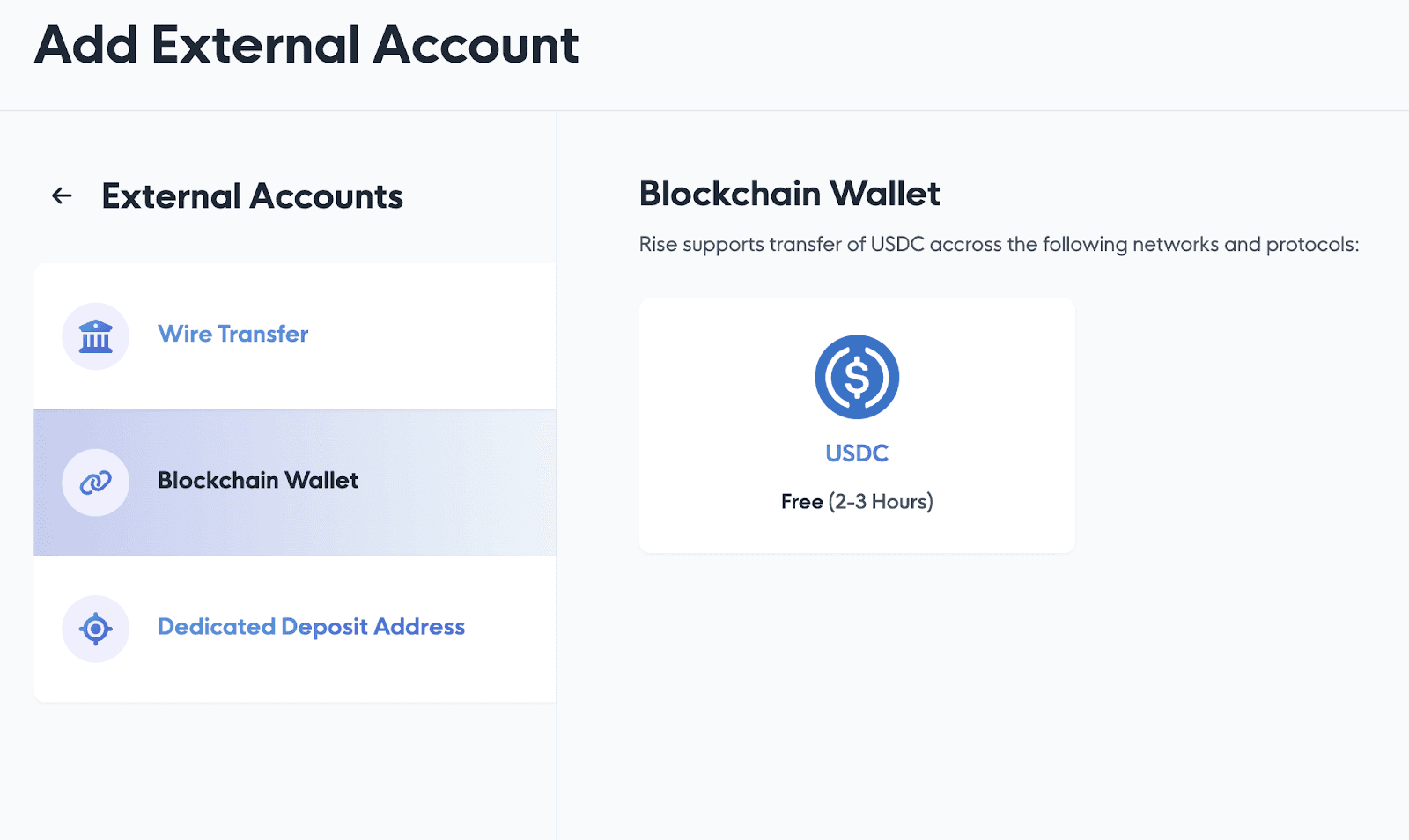
Step 2: Validate your wallet by selecting the appropriate Network.
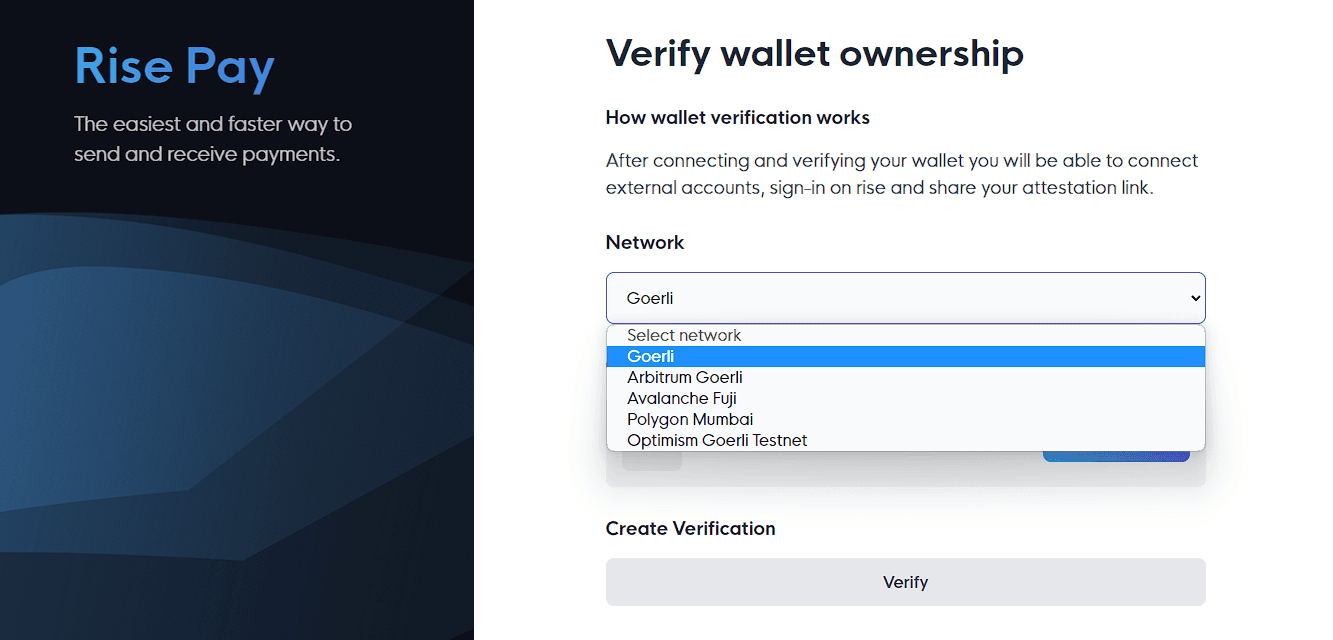
Step 3: Connect your preferred Web3 wallet by choosing "Connect Wallet."
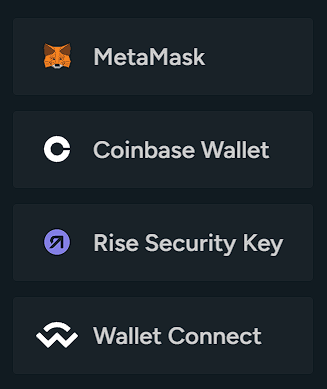
Pro Tip: Verifying your wallet opens doors to valuable benefits. After verification, you can link external accounts, log in to Rise, and share your attestation link.
Dedicated Deposit Address for Crypto Transfers
This option involves generating a specific address for incoming funds.
Step 1: Pick your preferred network or protocol from our supported EVM-compatible chains:

Step 2: Copy the deposit address and send funds directly from your Web3 wallet.
Note: Ensure you select the correct network to ensure the safety of your funds.
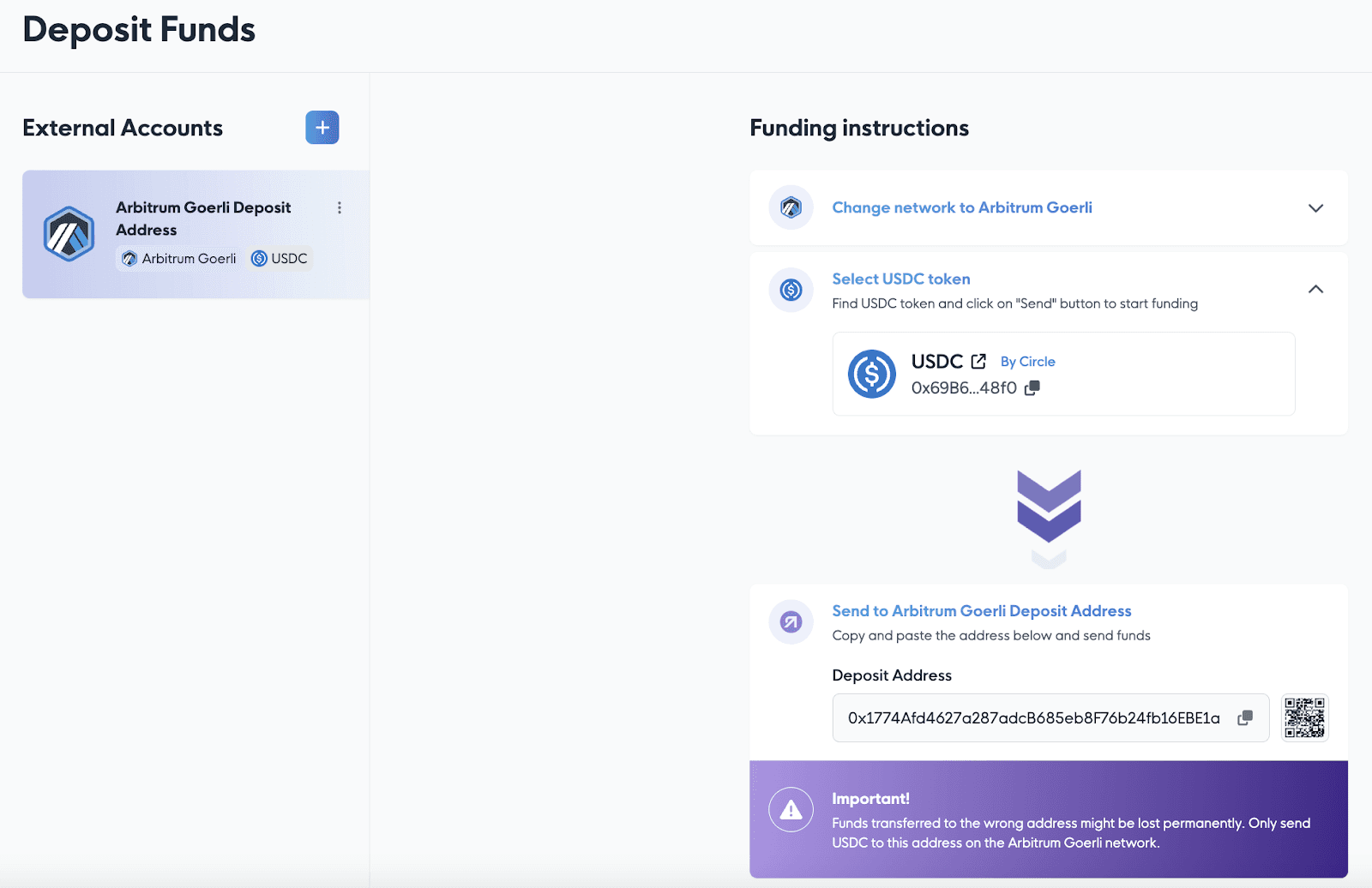
After funding your Rise account in USDC, you can then set up a pay schedule for a specific contractor, as well as issue mass payouts in batches, all at one time. The funds will automatically get converted to USD and arrive in your payee's Rise account in USD denomination.
For more on setting up payment schedules, check out our step by step tutorial here.
Now it's time for your global team members to select their perfect payment methods and bank account destinations for those sweet fiat payouts. Traditional bank transfers, digital wallets, or payment processors specialising in international payments can all be great options.
Rise allows your contractors and employees to easily connect their local bank accounts and convert their USD to local currency or even send that USD directly to international US bank accounts.
Best Practices for Managing Crypto-to-Fiat Payroll Operations
Managing a crypto-to-fiat payroll system requires some serious security measures to protect those digital assets. Treat your crypto wallets like a dragon guarding its gold—keep them securely stored, regularly backed up, and implement multi-factor authentication, strong passwords, and encryption to keep unwanted intruders at bay.
Do regular audits and reconciliations to ensure accuracy and identify any discrepancies in the payroll process. Verify your cryptocurrency holdings, conversion rates, and fiat currency payouts. These reviews are an excellent opportunity to fine-tune your processes and tackle any issues head-on.
Payroll operations will only go as smoothly as the treasury and liquidity management behind them.
We recommend:
Ensuring high levels of liquidity are maintained, often via a diversified portfolio that contains a large amount of high quality stablecoins or fiat currencies.
Keeping on top of the ever-changing compliance requirements.
Having a granular budgeting and forecasting system in place that ensures survival during times of market distress e.g bear markets.
Ensuring that your business has everything it needs to have optimal crypto accounting processes along with the right systems and tools will make a world of difference to how smoothly its payroll runs.
Embrace the Future of Crypto to Fiat Payments with Confidence
As businesses adapt to the global nature of work, efficient payroll management becomes more crucial than ever. That's why funding payroll in cryptocurrency and offering fiat currency payouts via Rise is the way to go. It's all about flexibility, automation, reduced costs, and lightning-fast international payments.
Yes, there are a few challenges along the way, but don't worry—we've got your back. By following the steps and best practices we've laid out, you'll be well-equipped to navigate the changing landscape while ensuring compliance, efficiency, and supercharged global payroll management. So go out there and embrace the future of payroll with confidence. Your team will thank you for it.